

In 2009 we began consulting jobs with governments in developing countries with the primary objective to consolidate data centers across government ministries and agencies into centralized, high capacity and quality data centers. At the time, nearly all individual ministry or agency data infrastructure was built into either small computers rooms or server closets with some added "brute force" air conditioning, no backup generators, no data back up, superficial security, and lots of other ailments.
The vision and strategy was that if we consolidated inefficient, end of life, and high risk IT infrastructure into a standardized and professionally managed facility, national information infrastructure would not only be more secure, but through standardization, volume purchasing agreements, some server virtualization, and development of broadband infrastructure most of the IT needs of government would be easily fulfilled.
Then of course cloud computing began to mature, and the underlying technologies of Infrastructure as a Service (IaaS) became feasible. Now, not only were the governments able to decommission inefficient and high-risk IS environments, they would also be able to build virtual data centers with levels of on-demand compute, storage, and network resources. Basic data center replacement.
Even those remaining committed "server hugger" IT managers and fiercely independent governmental organizations cloud hardly argue the benefits of having access to disaster recovery storage capacity though the centralized data center.
As the years passed, and we entered 2014, not only did cloud computing mature as a business model, but senior management began to increase their awareness of various aspects of cloud computing, including the financial benefits, standardization of IT resources, the characteristics of cloud computing, and potential for Platform and Software as a Service (PaaS/SaaS) to improve both business agility and internal decision support systems.

At the same time, information and organizational architecture, governance, and service delivery frameworks such as TOGAF, COBIT, ITIL, and Risk Analysis training reinforced the value of both data and information within an organization, and the need for IT systems to support higher level architectures supporting decision support systems and market interactions (including Government to Government, Business, and Citizens for the public sector).
2015 will bring cloud computing and architecture together at levels just becoming comprehensible to much of the business and IT world. The open Group has a good first stab at building a standard for this marriage with their Service-Oriented Cloud Computing Infrastructure (SOCCI). According to the SOCCI standard,
At first glance the SOCII standard appears to be a document which creates a mapping between enterprise architecture (TOGAF) and cloud computing. At second glance the SOCCI standard really steps towards tightening the loose coupling of standard service-oriented architectures through use of cloud computing tools included with all service models (IaaS/PaaS/SaaS).
The result is an architectural vision which is easily capable of absorbing existing IT requirements, as well as incorporating emerging big data analytics models, interoperability, and enterprise architecture.
Since the early days of 2009 discussion topics with government and enterprise customers have shown a marked transition from simply justifying decommissioning of high risk data centers to how to manage data sharing, interoperability, or the potential for over standardization and other service delivery barriers which might inhibit innovation - or ability of business units to quickly respond to rapidly changing market opportunities.
2015 will be an exciting year for information and communications technologies. For those of us in the consulting and training business, the new year is already shaping up to be the busiest we have seen.
The vision and strategy was that if we consolidated inefficient, end of life, and high risk IT infrastructure into a standardized and professionally managed facility, national information infrastructure would not only be more secure, but through standardization, volume purchasing agreements, some server virtualization, and development of broadband infrastructure most of the IT needs of government would be easily fulfilled.
Then of course cloud computing began to mature, and the underlying technologies of Infrastructure as a Service (IaaS) became feasible. Now, not only were the governments able to decommission inefficient and high-risk IS environments, they would also be able to build virtual data centers with levels of on-demand compute, storage, and network resources. Basic data center replacement.
Even those remaining committed "server hugger" IT managers and fiercely independent governmental organizations cloud hardly argue the benefits of having access to disaster recovery storage capacity though the centralized data center.
As the years passed, and we entered 2014, not only did cloud computing mature as a business model, but senior management began to increase their awareness of various aspects of cloud computing, including the financial benefits, standardization of IT resources, the characteristics of cloud computing, and potential for Platform and Software as a Service (PaaS/SaaS) to improve both business agility and internal decision support systems.
At the same time, information and organizational architecture, governance, and service delivery frameworks such as TOGAF, COBIT, ITIL, and Risk Analysis training reinforced the value of both data and information within an organization, and the need for IT systems to support higher level architectures supporting decision support systems and market interactions (including Government to Government, Business, and Citizens for the public sector).
2015 will bring cloud computing and architecture together at levels just becoming comprehensible to much of the business and IT world. The open Group has a good first stab at building a standard for this marriage with their Service-Oriented Cloud Computing Infrastructure (SOCCI). According to the SOCCI standard,
"Infrastructure is a foundational element for enterprise architecture. Infrastructure has been traditionally provisioned in a physical manner. With the evolution of virtualization technologies and application of service-orientation to infrastructure, it can now be offered as a service.
Service-orientation principles originated in the business and application architecture arena. After repeated, successful application of these principles to application architecture, IT has evolved to extending these principles to the infrastructure."
At first glance the SOCII standard appears to be a document which creates a mapping between enterprise architecture (TOGAF) and cloud computing. At second glance the SOCCI standard really steps towards tightening the loose coupling of standard service-oriented architectures through use of cloud computing tools included with all service models (IaaS/PaaS/SaaS).
The result is an architectural vision which is easily capable of absorbing existing IT requirements, as well as incorporating emerging big data analytics models, interoperability, and enterprise architecture.
Since the early days of 2009 discussion topics with government and enterprise customers have shown a marked transition from simply justifying decommissioning of high risk data centers to how to manage data sharing, interoperability, or the potential for over standardization and other service delivery barriers which might inhibit innovation - or ability of business units to quickly respond to rapidly changing market opportunities.
2015 will be an exciting year for information and communications technologies. For those of us in the consulting and training business, the new year is already shaping up to be the busiest we have seen.
If you are a regular user of the Internet, there is a fair chance that you will have seen advertisements in various sites for something like a "Free Online PC Software Check".
Sometimes these will invite you to click on a link that will claim to be able to scan your PC's hard disk with a view to both removing viruses and malware or sometimes in order to speed your PC up. A slight variation on the theme is sometimes seen where the advertisement offers to check just how fast your Internet connection is.
It should be noted that some of these so-called services may be legitimate but numbers of them are not and they would be highly dangerous to progress further with.
Frustrations with your PC
One of the commonest experiences around for technical computer support staff is users of technology complaining that their PC or network is running slowly.

In fact, that can easily happen and it could arise through any one of a number of causes. It is also true that in an increasingly security-conscious age, people are becoming ever more aware of the dangers of viruses etc. and are keen to try and make sure that their systems are clean.
So, the attractions of such apparently free deals on the net are obvious but the dangers rather less so.
What are the dangers?
In order to thoroughly check your PC for viruses or its performance, you need to allow a piece of software to look quite deep into its internals. As a result, as the software is going into the very deepest components of your machine, it also potentially has the opportunity to wreak havoc.
Numbers of free online checks are unfortunately simply malicious pieces of software that, under the guise of trying to help you, may well be placing viruses and other undesirable software (e.g. advertisements) into the very core of your system.
The basic solution here is very simple - don't assign access or control of your PC to an external piece of software unless you are absolutely sure you know who it is from and what they are doing.
For example, allowing an external technical computer support specialist that you know to be from a reliable company and who you are paying for their services to run software across your system to check for problems is one thing. Giving such permissions and access to somebody on the Internet you have never heard of is quite another.
Don't believe the label
Try to keep in mind that many crooks using such apparent free offers to gain access to your system, may well have littered their advertisement or website with impressive-looking names such as Microsoft or Apple etc.
That doesn't mean anything and should not be interpreted as indicating that their services being provided by such household-name companies or that the organisation offering the check has been approved by them.
If you are having problems with your system, be prepared to spend a relatively modest sum of money on a professional and verifiable computer support company who will be able to offer you assistance. Don't trust free offers on the net to do it for you because the chances are, they may be too good to be true!
Sometimes these will invite you to click on a link that will claim to be able to scan your PC's hard disk with a view to both removing viruses and malware or sometimes in order to speed your PC up. A slight variation on the theme is sometimes seen where the advertisement offers to check just how fast your Internet connection is.
It should be noted that some of these so-called services may be legitimate but numbers of them are not and they would be highly dangerous to progress further with.
Frustrations with your PC
One of the commonest experiences around for technical computer support staff is users of technology complaining that their PC or network is running slowly.
In fact, that can easily happen and it could arise through any one of a number of causes. It is also true that in an increasingly security-conscious age, people are becoming ever more aware of the dangers of viruses etc. and are keen to try and make sure that their systems are clean.
So, the attractions of such apparently free deals on the net are obvious but the dangers rather less so.
What are the dangers?
In order to thoroughly check your PC for viruses or its performance, you need to allow a piece of software to look quite deep into its internals. As a result, as the software is going into the very deepest components of your machine, it also potentially has the opportunity to wreak havoc.
Numbers of free online checks are unfortunately simply malicious pieces of software that, under the guise of trying to help you, may well be placing viruses and other undesirable software (e.g. advertisements) into the very core of your system.
The basic solution here is very simple - don't assign access or control of your PC to an external piece of software unless you are absolutely sure you know who it is from and what they are doing.
For example, allowing an external technical computer support specialist that you know to be from a reliable company and who you are paying for their services to run software across your system to check for problems is one thing. Giving such permissions and access to somebody on the Internet you have never heard of is quite another.
Don't believe the label
Try to keep in mind that many crooks using such apparent free offers to gain access to your system, may well have littered their advertisement or website with impressive-looking names such as Microsoft or Apple etc.
That doesn't mean anything and should not be interpreted as indicating that their services being provided by such household-name companies or that the organisation offering the check has been approved by them.
If you are having problems with your system, be prepared to spend a relatively modest sum of money on a professional and verifiable computer support company who will be able to offer you assistance. Don't trust free offers on the net to do it for you because the chances are, they may be too good to be true!
For many of us clouds still remain the fluffy white things that float in the sky or the darker fluffy things that bring thunderstorms and rain. Well, today there is more to clouds than being fluffy and to float in the sky. Cloud computing has given us a new way to perceive clouds. There was an era when we relied on portable drives, hardware and pen drives to very large extent and how we used to almost have stroke if we misplaced these precious data holders. Cloud computing reduces the stroke rate that one might get on losing a portable hardware. It is a service that one can subscribe to and get a network storage space and computer resources.
Cloud computing is similar to your e-mail account which you can access from any corner of the world as long as you are connected to the internet. The only difference is that with cloud computing you can choose from the information that is accessible within the cloud. The essentials that you need to get information from cloud computing is an internet connection on any device ranging from a personal computer to a tablet. Just like your email is not housed on your device physically, the information on cloud computing is also not housed on your device physically.
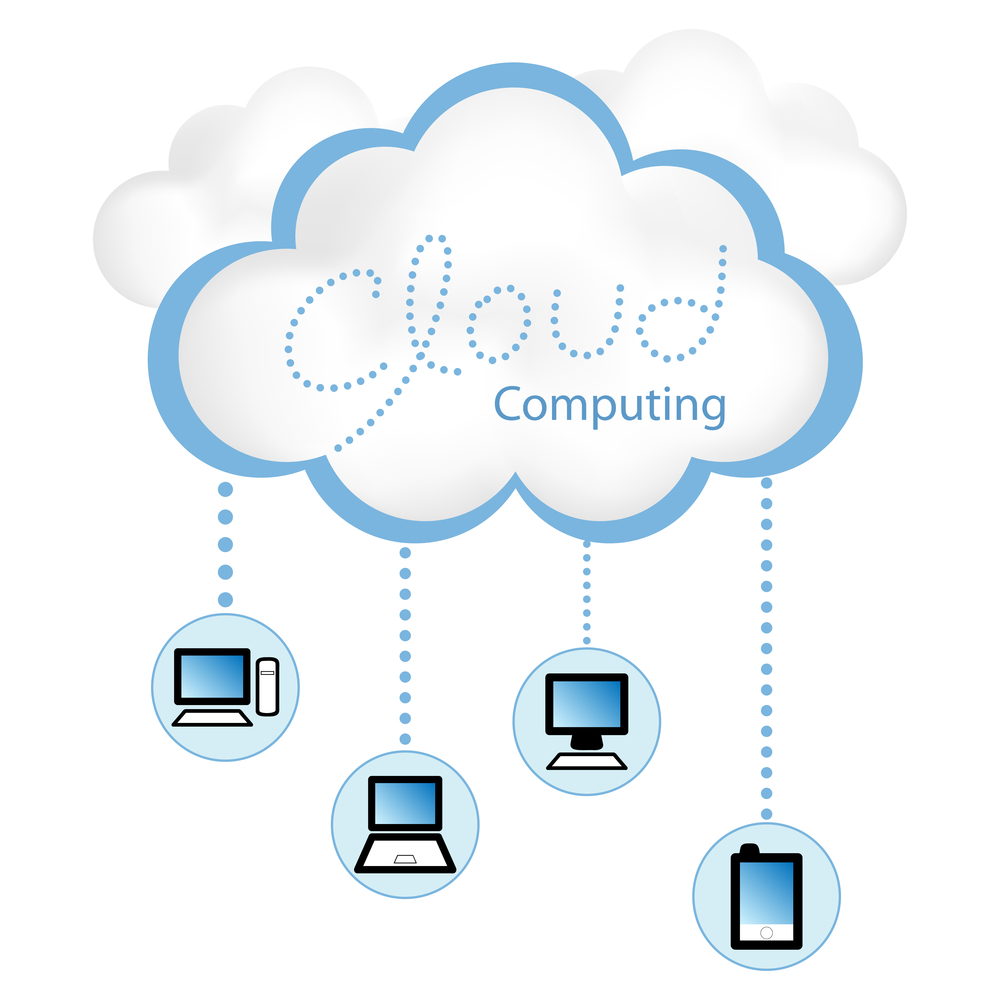
The convenience that cloud computing brings to the users is immense. To start with it's the best deal for upcoming businesses and start up organizations. It helps these budding ventures to make the best out of the limited resources have and give them a chance to stand up well established organizations that have a stock of hardware and software. It also serves well for people seeking to use it for their personal work. With the number of devices that one person owns today it might get a little messy to keep a track of the data one might have saved on either the phone or the laptop. Cloud computing helps one to cut through the clutter and becomes a kind of data bank.
There are different types of clouds that can suffice you needs. There is the Public, Private, Community and Hybrid cloud, each with its own specifications so to cater to the needs of different people. Public clouds are accessible to all the subscribers with an internet connection and access to cloud space. Private clouds are set up for specific groups or organizations. Community clouds are set up between two or more organizations that have similar cloud requirements. Lastly, hybrid clouds have the qualities of two types of clouds at the least. The combinations depend on requirements of the people or the organizations.
Cloud computing certainly is futuristic as long as you know that your service provider has taken all the necessary precautions and safety measures.
Cloud computing is similar to your e-mail account which you can access from any corner of the world as long as you are connected to the internet. The only difference is that with cloud computing you can choose from the information that is accessible within the cloud. The essentials that you need to get information from cloud computing is an internet connection on any device ranging from a personal computer to a tablet. Just like your email is not housed on your device physically, the information on cloud computing is also not housed on your device physically.
The convenience that cloud computing brings to the users is immense. To start with it's the best deal for upcoming businesses and start up organizations. It helps these budding ventures to make the best out of the limited resources have and give them a chance to stand up well established organizations that have a stock of hardware and software. It also serves well for people seeking to use it for their personal work. With the number of devices that one person owns today it might get a little messy to keep a track of the data one might have saved on either the phone or the laptop. Cloud computing helps one to cut through the clutter and becomes a kind of data bank.
There are different types of clouds that can suffice you needs. There is the Public, Private, Community and Hybrid cloud, each with its own specifications so to cater to the needs of different people. Public clouds are accessible to all the subscribers with an internet connection and access to cloud space. Private clouds are set up for specific groups or organizations. Community clouds are set up between two or more organizations that have similar cloud requirements. Lastly, hybrid clouds have the qualities of two types of clouds at the least. The combinations depend on requirements of the people or the organizations.
Cloud computing certainly is futuristic as long as you know that your service provider has taken all the necessary precautions and safety measures.
Recycling electronics has become a big issue as people discover the damage that e-waste causes to the environment. Computers and other mobile devices also often contain valuable material and people go to great lengths to extract the material before disposal. The rapid growth of the electronics recycling industry is a testament to the increasing demand for the services. When you decide to recycle your computer, there are some simple rules that you should follow to avoid making mistakes.
Know your recycler
With the long list of recycling companies out there, it is a good idea to know your recycler. You should avoid thinking that one recycling company is just as good as the next one. You should never recycle your equipment with a company that is not certified. You need to work with a company that follows the set standards to protect the environment while also ensuring the highest levels of data privacy. You will get better accountability from companies that have the relevant certifications and you are better off working directly with the company than with a third party.

Be wary of "free services"
If the service sounds too good to be true, that is because it probably is. When it comes to computer recycling, cheap can turn out to be very costly. There are free services turning up all over the place and you need to ask yourself what is in it for the companies. The truth is that the service providers know the value of your used electronics. The cheap services could mean that the company is cutting corners and it is very possible for your sensitive data to end up in the wrong hands. You should be very careful to avoid being part of environmental degradation or putting your company a risk.
Create a plan and follow it
Having a good and effective plan will help to make sure that your recycling efforts go smoothly. Create a disposition plan and make sure that you follow it to the letter. Find out the best practices for effective data security and remember that you are legally mandated to follow a good data security policy. When coming up with a data security plan, make sure that you include the services of certified recyclers for your electronics. The cost of litigation for data breach is too high to take these issues lightly.
By following the simple rules, you can enjoy peace of mind knowing that you are doing your part to protect the environment and ensuring your data is secure.
Know your recycler
With the long list of recycling companies out there, it is a good idea to know your recycler. You should avoid thinking that one recycling company is just as good as the next one. You should never recycle your equipment with a company that is not certified. You need to work with a company that follows the set standards to protect the environment while also ensuring the highest levels of data privacy. You will get better accountability from companies that have the relevant certifications and you are better off working directly with the company than with a third party.
Be wary of "free services"
If the service sounds too good to be true, that is because it probably is. When it comes to computer recycling, cheap can turn out to be very costly. There are free services turning up all over the place and you need to ask yourself what is in it for the companies. The truth is that the service providers know the value of your used electronics. The cheap services could mean that the company is cutting corners and it is very possible for your sensitive data to end up in the wrong hands. You should be very careful to avoid being part of environmental degradation or putting your company a risk.
Create a plan and follow it
Having a good and effective plan will help to make sure that your recycling efforts go smoothly. Create a disposition plan and make sure that you follow it to the letter. Find out the best practices for effective data security and remember that you are legally mandated to follow a good data security policy. When coming up with a data security plan, make sure that you include the services of certified recyclers for your electronics. The cost of litigation for data breach is too high to take these issues lightly.
By following the simple rules, you can enjoy peace of mind knowing that you are doing your part to protect the environment and ensuring your data is secure.
Information Technology Projects within large organizations are frequently started in response to some business need or business failing. There is a tendency in organizations to seek funding and approval for project implementation through proposals based on high-level business needs. Usually proposals are attractive, inviting in appearance and are laid out in the form of a statement of work. They focus on the needs and objectives to be met and put emphasis on the persuasive factor of getting the project approved with the intent of "selling the project."
A common approach is to proceed with the project implementation based on "the solution only" by defining the required resources, plan of action, deliverables, timelines, and estimated costs. The critical part of documenting business requirements is omitted and a brief list of very high level requirements is inserted to obtain funding and approval.

"The three major reasons that a project will succeed are user involvement, executive management support, and a clear statement of requirements." "Opinions about why projects are impaired and ultimately cancelled ranked incomplete requirements and lack of user involvement at the top of the list." Source the Sandish Group report: Chaos.
The main goals of documented requirements should be to deliver value, reduce time and cost, increase satisfaction and achieve success. In my experience, the three integral aspects that are necessary for the success of projects, but that are often missed out or not detailed enough, are:
1. Benefits and business value:
People lose focus of the project's benefits and sponsors do not commit to measuring and achieving the defined benefits. It is very difficult to achieve business value if there is lack of commitment to attain the defined benefits. The benefit statements should be clear, concise, and quantified.
2. Detailed business requirements:
Documented requirements are Important!!! In order to align the solutions for delivery of business value, the business requirements must be captured and the solution must be managed to meet them. In my opinion business requirements should be S.M.A.R.T., namely Specific, Measurable, Achievable, Results-focused and Time-bound. Furthermore the solution should be designed to satisfy and comply with organizations enterprise architecture.
3. Documented quality assurance processes:
The lack of detailed requirements creates a huge problem for the Quality assurance team that is expected to ensure the quality of the project as a whole. The quality assurance team needs to have the means to compare what was delivered, to what was required. The more detailed the requirements are, including what is the proof of success, the more likely quality could be achieved.
Findings from surveys of over 100 companies in Keith Ellis's report: "The Impact of Business Requirements on the Success of Technology Projects" determined that "Companies with poor business analysis capability will have three times as many project failures as successes. 68% of companies are more likely to have a marginal project or outright failure than a success due to the way they approach business analysis. In fact, 50% of this group's projects were "runaways" which had any 2 of: Taking over 180% of target time to deliver; Consuming in excess of 160% of estimated budget; Delivering under 70% of the target required functionality. Companies pay a premium of as much as 60% on time and budget when they use poor requirements practices on their projects. Over 40% of the IT development budget for software, staff and external professional services will be consumed by poor requirements at the average company using average analysts versus the optimal organization. The vast majority of projects surveyed did not utilize sufficient business analysis skill to consistently bring projects in on time and budget. The level of competency required is higher than that employed within projects for 70% of the companies surveyed."
One must always remember that people in different roles will view the project from their own perspective and will not always see the bigger picture. A consolidation phase of requirements analysis needs to be done to look at these different perspectives and present an overall holistic best solution.
In FAO gathering business requirements is performed through brainstorming sessions with the business units and/or defining phased deliverables to be used as prototypes. The Information Technology Division in FAO has put in place mechanisms for ensuring Quality Assurance involvement in all phases of project implementation, from the project inception to project closure phases. In addition, emphasis for all IT projects to measure benefits and liaise with our business units to develop detailed business document requirements has become a prerequisite to project approval. In 2015 the IT division will measure the rate of improved project delivery due to increased business requirements definition.
In Karl E. Wiegers presentation, the "Cosmic Truths about Software Requirements" the following points are some key points to remember:
If you don't get the requirements right, it doesn't matter how well you execute the rest of the project; Requirements development is a discovery and invention process, not just a collection process; The interests of all the project stakeholders intersect in the requirements process; The first question an analyst should ask about a proposed new requirement is "Is this requirement in scope?"; The requirements might be vague, but the product will be specific.
On a final note, as considerable resources in terms of people and money are used to deliver what is actually needed for the realization of the expected business value and objectives, good business requirements are instrumental to avoid failures and complete successful projects.
A common approach is to proceed with the project implementation based on "the solution only" by defining the required resources, plan of action, deliverables, timelines, and estimated costs. The critical part of documenting business requirements is omitted and a brief list of very high level requirements is inserted to obtain funding and approval.
"The three major reasons that a project will succeed are user involvement, executive management support, and a clear statement of requirements." "Opinions about why projects are impaired and ultimately cancelled ranked incomplete requirements and lack of user involvement at the top of the list." Source the Sandish Group report: Chaos.
The main goals of documented requirements should be to deliver value, reduce time and cost, increase satisfaction and achieve success. In my experience, the three integral aspects that are necessary for the success of projects, but that are often missed out or not detailed enough, are:
1. Benefits and business value:
People lose focus of the project's benefits and sponsors do not commit to measuring and achieving the defined benefits. It is very difficult to achieve business value if there is lack of commitment to attain the defined benefits. The benefit statements should be clear, concise, and quantified.
2. Detailed business requirements:
Documented requirements are Important!!! In order to align the solutions for delivery of business value, the business requirements must be captured and the solution must be managed to meet them. In my opinion business requirements should be S.M.A.R.T., namely Specific, Measurable, Achievable, Results-focused and Time-bound. Furthermore the solution should be designed to satisfy and comply with organizations enterprise architecture.
3. Documented quality assurance processes:
The lack of detailed requirements creates a huge problem for the Quality assurance team that is expected to ensure the quality of the project as a whole. The quality assurance team needs to have the means to compare what was delivered, to what was required. The more detailed the requirements are, including what is the proof of success, the more likely quality could be achieved.
Findings from surveys of over 100 companies in Keith Ellis's report: "The Impact of Business Requirements on the Success of Technology Projects" determined that "Companies with poor business analysis capability will have three times as many project failures as successes. 68% of companies are more likely to have a marginal project or outright failure than a success due to the way they approach business analysis. In fact, 50% of this group's projects were "runaways" which had any 2 of: Taking over 180% of target time to deliver; Consuming in excess of 160% of estimated budget; Delivering under 70% of the target required functionality. Companies pay a premium of as much as 60% on time and budget when they use poor requirements practices on their projects. Over 40% of the IT development budget for software, staff and external professional services will be consumed by poor requirements at the average company using average analysts versus the optimal organization. The vast majority of projects surveyed did not utilize sufficient business analysis skill to consistently bring projects in on time and budget. The level of competency required is higher than that employed within projects for 70% of the companies surveyed."
One must always remember that people in different roles will view the project from their own perspective and will not always see the bigger picture. A consolidation phase of requirements analysis needs to be done to look at these different perspectives and present an overall holistic best solution.
In FAO gathering business requirements is performed through brainstorming sessions with the business units and/or defining phased deliverables to be used as prototypes. The Information Technology Division in FAO has put in place mechanisms for ensuring Quality Assurance involvement in all phases of project implementation, from the project inception to project closure phases. In addition, emphasis for all IT projects to measure benefits and liaise with our business units to develop detailed business document requirements has become a prerequisite to project approval. In 2015 the IT division will measure the rate of improved project delivery due to increased business requirements definition.
In Karl E. Wiegers presentation, the "Cosmic Truths about Software Requirements" the following points are some key points to remember:
If you don't get the requirements right, it doesn't matter how well you execute the rest of the project; Requirements development is a discovery and invention process, not just a collection process; The interests of all the project stakeholders intersect in the requirements process; The first question an analyst should ask about a proposed new requirement is "Is this requirement in scope?"; The requirements might be vague, but the product will be specific.
On a final note, as considerable resources in terms of people and money are used to deliver what is actually needed for the realization of the expected business value and objectives, good business requirements are instrumental to avoid failures and complete successful projects.
With the holidays fast approaching right there's a small but expensive gift for a special person. A smart watch is designed to coordinate with your phone using Bluetooth technology to make sure that you never miss a call again. Your smart watch will notify you of a call and if set for it, will also tell you who is calling. No need to drag you phone out of your pocket or from the bottom of your handbag. You can discretely check your watch.
Not all smart watches are created equal. Prior to your acquiring one, here are some factors to check:
1. Compatibility with your kind of phone
2. Strength of battery and also just how frequently it needs charging
3. What features you want
Some consist of: notification from social networks as well as calls, stop watch and also calendar, voice activation, water-proof, various alerts and shock-proof.
4. Design
Do you want something streamlined and also contemporary or are you a geek who really wants a big watch with every feature possible?
5. Simplicity of use
Does it effortlessly fit your wrist? Do you require something shock-proof? Can you check out the dial effortlessly? Remember that this machine needs to make your life simpler, not more difficult.
Here are the 10 finest smart watches for 2014: MetaWatch Strata, MetaWatch Frame, Pebble, Cookoo, I'm Watch, Samsung Galaxy Gear, Martian G2G, Martian Passport, Martian Victory, and Sony LiveView. I'm going to select 3 of these to review in detail. These three represent the variety that exists among these watches.

6. MetaWatch Strata
This is an extremely strong watch that can take some knocking around. The band is flexible plastic and also washable. There is a scratch-resistant face and also it is water resistant. The battery can last for a week on one charge.There are a number of stylish colors for the band - electric blue, pink, orange and lime green as well as the conventional grey. There are a lot more features and also applications that can be downloaded as apps to this phone suitable for iPhones. At $145 this is among the less expensive smart watches.
7. Samsung Galaxy Gear
This is a sleek, steamlined watch simply produced for a female who likes jewelry. No Samsung S3 or S4 is complete without one of these smart watches. One unique benefit includes protection of your phone. When you walk more than 5 feet away from your phone, the Gear secures and locks your phone, then unlocks it as soon as you return. The screen face is quite clear and also the battery lasts for 2-3 days between charges. The voice function allows you to dictate messages, established reminders and also make calls. This watch is $337 retail.
8. Sony LiveView
This is one that fits someone on a small budget as it weighs in at just $25.86. It can easily be connected to a purse strap but wrist bands are available. For something so small it is surprisingly useful with Facebook and also Twitter updates as well as the conventional features. You can upload as well as play songs from your phone, and also acquire gmail updates. However, there is no Bluetooth capability in the watch itself. As soon as the reception is gone, it leaves this phone unusable as it acquires its signal from the phone. One really useful feature is the "Find Phone" feature. If you can not find your phone, the Sony LiveView will allow you to find it by calling it for you.
As you can see, these phones are fairly different from each other and also from various other devices and accessories. Considering that these watches are so new, it's a good concept to try them before you buy. At the very least put them on and also see if all the buttons function. "If you consider all of the factors above, you will surely find a smart watch that is a perfect fit for you. Then, you can stop missing important calls or messages while simultaneously checking your phone less frequently."
Exactly what will 2015 bring for new Smart Watch technology? Currently smart watches have started appearing that do not require phone connections in order to function - essentially a cell phone watch. The world of the cartoon character, Dick Tracy with his two-way walkie-talkie wrist watch has arrived finally.
Not all smart watches are created equal. Prior to your acquiring one, here are some factors to check:
1. Compatibility with your kind of phone
2. Strength of battery and also just how frequently it needs charging
3. What features you want
Some consist of: notification from social networks as well as calls, stop watch and also calendar, voice activation, water-proof, various alerts and shock-proof.
4. Design
Do you want something streamlined and also contemporary or are you a geek who really wants a big watch with every feature possible?
5. Simplicity of use
Does it effortlessly fit your wrist? Do you require something shock-proof? Can you check out the dial effortlessly? Remember that this machine needs to make your life simpler, not more difficult.
Here are the 10 finest smart watches for 2014: MetaWatch Strata, MetaWatch Frame, Pebble, Cookoo, I'm Watch, Samsung Galaxy Gear, Martian G2G, Martian Passport, Martian Victory, and Sony LiveView. I'm going to select 3 of these to review in detail. These three represent the variety that exists among these watches.
6. MetaWatch Strata
This is an extremely strong watch that can take some knocking around. The band is flexible plastic and also washable. There is a scratch-resistant face and also it is water resistant. The battery can last for a week on one charge.There are a number of stylish colors for the band - electric blue, pink, orange and lime green as well as the conventional grey. There are a lot more features and also applications that can be downloaded as apps to this phone suitable for iPhones. At $145 this is among the less expensive smart watches.
7. Samsung Galaxy Gear
This is a sleek, steamlined watch simply produced for a female who likes jewelry. No Samsung S3 or S4 is complete without one of these smart watches. One unique benefit includes protection of your phone. When you walk more than 5 feet away from your phone, the Gear secures and locks your phone, then unlocks it as soon as you return. The screen face is quite clear and also the battery lasts for 2-3 days between charges. The voice function allows you to dictate messages, established reminders and also make calls. This watch is $337 retail.
8. Sony LiveView
This is one that fits someone on a small budget as it weighs in at just $25.86. It can easily be connected to a purse strap but wrist bands are available. For something so small it is surprisingly useful with Facebook and also Twitter updates as well as the conventional features. You can upload as well as play songs from your phone, and also acquire gmail updates. However, there is no Bluetooth capability in the watch itself. As soon as the reception is gone, it leaves this phone unusable as it acquires its signal from the phone. One really useful feature is the "Find Phone" feature. If you can not find your phone, the Sony LiveView will allow you to find it by calling it for you.
As you can see, these phones are fairly different from each other and also from various other devices and accessories. Considering that these watches are so new, it's a good concept to try them before you buy. At the very least put them on and also see if all the buttons function. "If you consider all of the factors above, you will surely find a smart watch that is a perfect fit for you. Then, you can stop missing important calls or messages while simultaneously checking your phone less frequently."
Exactly what will 2015 bring for new Smart Watch technology? Currently smart watches have started appearing that do not require phone connections in order to function - essentially a cell phone watch. The world of the cartoon character, Dick Tracy with his two-way walkie-talkie wrist watch has arrived finally.
The Nexus 6 By Google And More In The Latest Smartphone News
The Google Nexus 6 Is Breathtaking
It was October 2014 that Google released the Nexus 6 smartphone. At the time, it seems curious to challenge the iPhone 6, and it's bigger sister the iPhone 6 Plus. Google hopes to challenge Apple in the marketplace, and to steal their headlines with the recent iPhone releases.
We are always diligent about our research of all the best new smartphones in order to help you find the best fit for you. This review takes a look at the new Google Nexus 6 smartphone, and our review may be a little surprising.

Here's Everything We Know Already
Produced by Motorola the Google Nexus 6 smartphone comes with a huge 6-inch screen meaning that it is barely (less than an inch) smaller than the nearest tablet.
What this phone lacks in compression, it makes up for with top-class resolution to watch all your videos and pictures. With a 1440 x 2560 resolution along with a 13-megapixel camera, you'll take breathtaking pictures and view video in stunning definition.
The Nexus 6 can be purchased contract-free (unlocked) for $649, and this amount may be a little shocking to users familiar with the Google brand. This price point causes it to be the costliest of Google's phones.
If a cheap smartphone is what you're looking for, you may want to get a standard 2-year service agreement. This contract will price the Nexus 6 at $349 available with all of the chief carriers from Verizon, AT&T, T-Mobile, US Cellular and Sprint.
This move is clearly a ploy by Google to expand its market access and deviates from its conventional model of only releasing their smartphones on Google Play store and serviced by T-Mobile.
By putting the Nexus 6 into more carriers, clearly their hope is that it will help Google expand its market share of the smartphone business.
What This All Means To The Smartphone Market
With the recent releases of Apple's iPhone 6, the Samsung Note 4, the larger iPhone 6 Plus and now the Google Nexus 6, there's a number of outstanding options for future smartphone purchase.
This marketplace saturation also indicates that come the holiday shopping season; you'll find some outstanding deals on all the best new smartphones. So if you're looking to acquire a new cheap phone or in search of the best new one, then you should be able to find exactly what you need easily.
Whereas the Nexus 6 is an outstanding new phone, it's introduction into the market will mean that there are numerous deals on a cheap phone if you know how, and where, to contemplate.
As mentioned in the article earlier, the biggest advantage of all these new phones on the market will be furious sales and deals. With the upcoming holiday shopping season, you should be able to locate a great cheap smartphone easily.
By waiting for these holiday deals, you'll find a great phone at ridiculous prices that will perfectly suit your needs. From finding Black Friday deals to Cyber-Monday steals, there will be prices much cheaper than those publicized now. But you'll have to wait a couple months, and as it's said, good things come to those who wait.
It's never been a better time to purchase a new or cheap phone and there are a number of online stores to help you locate the best prices. So check out phones on Amazon, inside the Google Play store or Best Buy among others to find your next holiday shopping deal.
The Google Nexus 6 Is Breathtaking
It was October 2014 that Google released the Nexus 6 smartphone. At the time, it seems curious to challenge the iPhone 6, and it's bigger sister the iPhone 6 Plus. Google hopes to challenge Apple in the marketplace, and to steal their headlines with the recent iPhone releases.
We are always diligent about our research of all the best new smartphones in order to help you find the best fit for you. This review takes a look at the new Google Nexus 6 smartphone, and our review may be a little surprising.
Here's Everything We Know Already
Produced by Motorola the Google Nexus 6 smartphone comes with a huge 6-inch screen meaning that it is barely (less than an inch) smaller than the nearest tablet.
What this phone lacks in compression, it makes up for with top-class resolution to watch all your videos and pictures. With a 1440 x 2560 resolution along with a 13-megapixel camera, you'll take breathtaking pictures and view video in stunning definition.
The Nexus 6 can be purchased contract-free (unlocked) for $649, and this amount may be a little shocking to users familiar with the Google brand. This price point causes it to be the costliest of Google's phones.
If a cheap smartphone is what you're looking for, you may want to get a standard 2-year service agreement. This contract will price the Nexus 6 at $349 available with all of the chief carriers from Verizon, AT&T, T-Mobile, US Cellular and Sprint.
This move is clearly a ploy by Google to expand its market access and deviates from its conventional model of only releasing their smartphones on Google Play store and serviced by T-Mobile.
By putting the Nexus 6 into more carriers, clearly their hope is that it will help Google expand its market share of the smartphone business.
What This All Means To The Smartphone Market
With the recent releases of Apple's iPhone 6, the Samsung Note 4, the larger iPhone 6 Plus and now the Google Nexus 6, there's a number of outstanding options for future smartphone purchase.
This marketplace saturation also indicates that come the holiday shopping season; you'll find some outstanding deals on all the best new smartphones. So if you're looking to acquire a new cheap phone or in search of the best new one, then you should be able to find exactly what you need easily.
Whereas the Nexus 6 is an outstanding new phone, it's introduction into the market will mean that there are numerous deals on a cheap phone if you know how, and where, to contemplate.
As mentioned in the article earlier, the biggest advantage of all these new phones on the market will be furious sales and deals. With the upcoming holiday shopping season, you should be able to locate a great cheap smartphone easily.
By waiting for these holiday deals, you'll find a great phone at ridiculous prices that will perfectly suit your needs. From finding Black Friday deals to Cyber-Monday steals, there will be prices much cheaper than those publicized now. But you'll have to wait a couple months, and as it's said, good things come to those who wait.
It's never been a better time to purchase a new or cheap phone and there are a number of online stores to help you locate the best prices. So check out phones on Amazon, inside the Google Play store or Best Buy among others to find your next holiday shopping deal.
If you're the kind of power user that goes out and buys the latest flagship phone every year you may be thinking of getting the Apple's new iPhone 6 Plus. Before you do however, it is a good idea to give some serious thought to the 6 Plus' slightly smaller sibling, the plain vanilla iPhone 6.
The media frenzy and people's attention have all been for the huge 6 Plus because it has been such a long wait for a phone this size from Apple. Smartphone users who were stuck on iOS either because they loved it or because they were tied in to Apple's ecosystem, have glazed with gadget envy for a long time, upon huge phablet phones like the Samsung Galaxy Note.
This fact has not been lost on the Korean smartphone maker either. With savvy marketing and some really slick, funny advertising, Samsung has repeatedly hammered home on the fact that Apple does not have a large screen phone and that is what Apple phone users hope for every year.

All that changed this year however, with the launch of the iPhone 6 Plus, a 5.5" screened giant of a phone that is too large for most people with regular sized hands to use single handedly and that is the crux of the matter.
The iPhone 6 Plus may have a huge, gorgeous screen that is widely regarded as the best screen currently shipping on a smartphone but that comes at the cost of practicality. One handed use is out of the window for anyone unless you are over 6 feet tall and have the hands to match your height.
Even Apple acknowledges this fact because one of the few bits of custom software on the 6 Plus is the ability to slide the entire screen down so you can reach screen elements in the upper half without having to use a second hand.
The 6 Plus is also difficult to fit into pockets due to its size. A recent story about the Chinese cellphone provider giving away free pocket enlargement alterations with sales of the iPhone 6 Plus, sounds like satire but it is a true story.
For people who do not realise it, the iPhone 6 has not stayed the same size as the previous generation either. Even it has grown by half an inch to clock in at around 5" now so you can still have a large iPhone without having to go all the way to the 6 Plus.
The iPhone 6 allows for much easier one handed use and much easier fit in your pockets and clothing due to its smaller size, even with one of the many iPhone 6 cases on it. You might even get slightly longer battery life due to its slightly smaller screen that chews through a little less power than the 6 Plus.
There is also the matter of price, the iPhone 6 is a considerable amount cheaper than the 6 Plus and that money could be spent on a nicer pair of earphones than the ones Apple provides with the phone or cool designer cases at site like daily objects.
The upshot is, even if you are looking to upsize your iPhone on your next upgrade, for many people the iPhone 6 may actually be a big enough increase in size.
No one wants to get stuck in the limbo of mundanity, so why should you iPhone 6 Cases should look ordinary or like the ones that millions of other people are carrying. With a fabulous range of iPhone 6 cases that we offer you can give it a nice makeover. iPhone 6 Custom Cases is the another option for people who would want to give a real personal touch to their phone.
The media frenzy and people's attention have all been for the huge 6 Plus because it has been such a long wait for a phone this size from Apple. Smartphone users who were stuck on iOS either because they loved it or because they were tied in to Apple's ecosystem, have glazed with gadget envy for a long time, upon huge phablet phones like the Samsung Galaxy Note.
This fact has not been lost on the Korean smartphone maker either. With savvy marketing and some really slick, funny advertising, Samsung has repeatedly hammered home on the fact that Apple does not have a large screen phone and that is what Apple phone users hope for every year.
All that changed this year however, with the launch of the iPhone 6 Plus, a 5.5" screened giant of a phone that is too large for most people with regular sized hands to use single handedly and that is the crux of the matter.
The iPhone 6 Plus may have a huge, gorgeous screen that is widely regarded as the best screen currently shipping on a smartphone but that comes at the cost of practicality. One handed use is out of the window for anyone unless you are over 6 feet tall and have the hands to match your height.
Even Apple acknowledges this fact because one of the few bits of custom software on the 6 Plus is the ability to slide the entire screen down so you can reach screen elements in the upper half without having to use a second hand.
The 6 Plus is also difficult to fit into pockets due to its size. A recent story about the Chinese cellphone provider giving away free pocket enlargement alterations with sales of the iPhone 6 Plus, sounds like satire but it is a true story.
For people who do not realise it, the iPhone 6 has not stayed the same size as the previous generation either. Even it has grown by half an inch to clock in at around 5" now so you can still have a large iPhone without having to go all the way to the 6 Plus.
The iPhone 6 allows for much easier one handed use and much easier fit in your pockets and clothing due to its smaller size, even with one of the many iPhone 6 cases on it. You might even get slightly longer battery life due to its slightly smaller screen that chews through a little less power than the 6 Plus.
There is also the matter of price, the iPhone 6 is a considerable amount cheaper than the 6 Plus and that money could be spent on a nicer pair of earphones than the ones Apple provides with the phone or cool designer cases at site like daily objects.
The upshot is, even if you are looking to upsize your iPhone on your next upgrade, for many people the iPhone 6 may actually be a big enough increase in size.
No one wants to get stuck in the limbo of mundanity, so why should you iPhone 6 Cases should look ordinary or like the ones that millions of other people are carrying. With a fabulous range of iPhone 6 cases that we offer you can give it a nice makeover. iPhone 6 Custom Cases is the another option for people who would want to give a real personal touch to their phone.
The mobile industry is a burgeoning one, with a whole host of different companies vying for the top spot. At first, the top spot belonged to Apple, as it comfortably swept aside the competition and rose to the fore. However, Apple was unable to maintain its advantage at the top, and a lack of innovation and ingenuity on their part saw the American behemoths fall second to South Korean tech giants Samsung. Samsung had partnered with Google, and their excellent Samsung Galaxy line of mobile phones has been popularly received throughout the globe. The mobile phones have become hugely popular not only for their performance as well as their outlook. But, are they good enough? Can they compete with others? Here's a brief guide on the different mobile phone operating systems:
iOS
The Apple iPhones all run the iOS mobile operating system. Apple's iOS has not seen a lot of aesthetic changes since the time it was revealed, though recently it did undergo a complete renewal as iOS 8 was released in the market, which saw newer icons and newer facilities being provided to users. The iOS has a range of different connectivity options as well, and supports a wide range of new features. The Apple iPhone 6 and the Apple iPhone 6 Plus are both outfitted with Apple's operating system, and have become hugely popular. However, they are expensive. Apple has always been reserved for those who have a significant amount of money to spare, and the iPhones are no exception. Starting from $650 and going as high as $1,000 for the fully outfitted version, it is not a mobile phone that one would purchase every now and then.

Android phones
The Android operating system is unparalleled in terms of quality and performance; it is an extremely flexible operating system that can be customized with a whole host of different skins and choices that will add a completely different experience to your everyday usage. Some of the best phones on the market, such as the HTC One, the Samsung Galaxy S5 and the OnePlus One, are all powered by Android, though with different skins on the top, which add a completely new usage experience over the top. Unlike Apple, Android phones are available in a bunch of different varieties as well, so you can easily choose between a range of different options, both expensive and affordable.
Other options
There are a range of other options available too, such as the Blackberry Devices or the Windows Phone supported mobile devices. The Windows Phones are mainly manufactured by Nokia, which was wholly bought by Nokia, while the Blackberry interface has all but receded from the market, becoming a shadow of what it once used to be. However, both of these have a very small share of the market, which means that they are a great option for people who are used to them, but not such a good option for those who are looking to buy their first smartphone.
I just wanted to share my trick of researching the phone models, just go to Google image search and if you are in Sri Lanka then search for buy mobile in Sri Lanka will give you list of various phones available in your country. Now you may choose the phone by appearance and then look for its features by going to the linked website.
iOS
The Apple iPhones all run the iOS mobile operating system. Apple's iOS has not seen a lot of aesthetic changes since the time it was revealed, though recently it did undergo a complete renewal as iOS 8 was released in the market, which saw newer icons and newer facilities being provided to users. The iOS has a range of different connectivity options as well, and supports a wide range of new features. The Apple iPhone 6 and the Apple iPhone 6 Plus are both outfitted with Apple's operating system, and have become hugely popular. However, they are expensive. Apple has always been reserved for those who have a significant amount of money to spare, and the iPhones are no exception. Starting from $650 and going as high as $1,000 for the fully outfitted version, it is not a mobile phone that one would purchase every now and then.
Android phones
The Android operating system is unparalleled in terms of quality and performance; it is an extremely flexible operating system that can be customized with a whole host of different skins and choices that will add a completely different experience to your everyday usage. Some of the best phones on the market, such as the HTC One, the Samsung Galaxy S5 and the OnePlus One, are all powered by Android, though with different skins on the top, which add a completely new usage experience over the top. Unlike Apple, Android phones are available in a bunch of different varieties as well, so you can easily choose between a range of different options, both expensive and affordable.
Other options
There are a range of other options available too, such as the Blackberry Devices or the Windows Phone supported mobile devices. The Windows Phones are mainly manufactured by Nokia, which was wholly bought by Nokia, while the Blackberry interface has all but receded from the market, becoming a shadow of what it once used to be. However, both of these have a very small share of the market, which means that they are a great option for people who are used to them, but not such a good option for those who are looking to buy their first smartphone.
I just wanted to share my trick of researching the phone models, just go to Google image search and if you are in Sri Lanka then search for buy mobile in Sri Lanka will give you list of various phones available in your country. Now you may choose the phone by appearance and then look for its features by going to the linked website.
Popular Posts
-
 When Internet technology invaded the mobile phone industry, the sales of broadband-ready mobile phones grew to millions on a daily basis. ...
 -
 Secret codes for Android mobile operating system. If you are unsure about any codes better not to execute it. Most of the codes are meant fo...
 -
 The Rise of the Tablet Computer Few electronic devices have enjoyed the rapid surge in popularity and usage that tablet computers have. M...
 -
 Increasing your typing speed (WPM) can be a challenge for people who have already learned the basics of keyboarding. Learn where to put...
 -
 "Who Else Wants To Know Every Dollar Saving Trick, Every Scam-Stopping Tip, And Every Must-Know Bit Of Information You Need When Buyin...


