

With developing technology, our expectations from technology-aided learning have also been rising. With the advent of modern Learning Management Software (LMS) we can now create learning platforms which cater to all the learning needs of a learner and helps him or her to perform better. With increasing investments and positive ROI, various types of LMS are being adopted more and more to ensure enterprise-wide e-learning.
LMS enables learning and development managers within an organization to achieve a lot. Some of the basic features of a learning platform ensure that the entire process of learning management is automated. A basic entry-level learning platform has the following capabilities:
• Course catalogues
• Scheduling of all training events - e-learning and otherwise
• Built-in report structures and Automated Reporting
• Inbuilt assessments - CYUs, quizzes or question banks
• Automated notification emails

But with increased needs, L&D managers often choose to implement Learning Management Software which provides not only the rudimentary needs, but enhanced features which can be utilized to suit changing and evolving learning objectives. These features are best suited for organizations that are open to exploring newer modes for training and believe that their trainees will benefit from them. The modern features include:
• Social learning: Through collaborative platforms like wikis, discussion boards and blogs built within the learning platform, learners can collaborate closely with each other and learn better.
• Mobile Learning: Learners can access courses through mobile devices and their progress is synched automatically within the main system.
• In-built video player: Access to instructional videos, 3D simulations or webinars within the confines of the LMS.
• Automatic notification through SMS
In addition, most organizations that have successfully implemented learning platforms take suitable steps to ensure that the Learning Management Software is adopted by all. It is wise to create a specific workflow and decide who is authorized to assign trainings, who will approve the attendees, who will monitor reports and so on. If this workflow is worked out and every stakeholder knows his or her role well, the learning initiative will be successful. The benefits of training should be clear to the learners, instructors, managers, administrators as well as technical support staff. They should also be well-versed with the working of the LMS. Finally, it is a great boost if the benefits of e-learning and learning management systems are sold well to the end users. There should be a well-defined campaign within the organization, led by the people managers as well as function managers who can educate the learners on how the system will help them perform better.
After implementation of the Learning Management Software it is prudent to keep a close eye on reports and assessments to understand how much have the learners gained out of the e-learning initiative. Feedback from learners should also be gathered from time to time to assess the impact of the learning solution and how much it helps them perform better.
Learning Management Software is evolving -- keeping itself in perfect match with developing technology and the changing needs of the modern learner. It is being utilized by organizations with varying training needs and this proves LMS as a ubiquitous solution that is truly aligned to corporate training.
Gireesh is an e-learning enthusiast and an avid follower of leading industry blogs related to topics related to online training software like Rapid Authoring, game based learning, learning management system elearning outsourcing, online learning courses, Mobile Learning, etc. and like to discuss leading trends of new-age corporate learning.
LMS enables learning and development managers within an organization to achieve a lot. Some of the basic features of a learning platform ensure that the entire process of learning management is automated. A basic entry-level learning platform has the following capabilities:
• Course catalogues
• Scheduling of all training events - e-learning and otherwise
• Built-in report structures and Automated Reporting
• Inbuilt assessments - CYUs, quizzes or question banks
• Automated notification emails
But with increased needs, L&D managers often choose to implement Learning Management Software which provides not only the rudimentary needs, but enhanced features which can be utilized to suit changing and evolving learning objectives. These features are best suited for organizations that are open to exploring newer modes for training and believe that their trainees will benefit from them. The modern features include:
• Social learning: Through collaborative platforms like wikis, discussion boards and blogs built within the learning platform, learners can collaborate closely with each other and learn better.
• Mobile Learning: Learners can access courses through mobile devices and their progress is synched automatically within the main system.
• In-built video player: Access to instructional videos, 3D simulations or webinars within the confines of the LMS.
• Automatic notification through SMS
In addition, most organizations that have successfully implemented learning platforms take suitable steps to ensure that the Learning Management Software is adopted by all. It is wise to create a specific workflow and decide who is authorized to assign trainings, who will approve the attendees, who will monitor reports and so on. If this workflow is worked out and every stakeholder knows his or her role well, the learning initiative will be successful. The benefits of training should be clear to the learners, instructors, managers, administrators as well as technical support staff. They should also be well-versed with the working of the LMS. Finally, it is a great boost if the benefits of e-learning and learning management systems are sold well to the end users. There should be a well-defined campaign within the organization, led by the people managers as well as function managers who can educate the learners on how the system will help them perform better.
After implementation of the Learning Management Software it is prudent to keep a close eye on reports and assessments to understand how much have the learners gained out of the e-learning initiative. Feedback from learners should also be gathered from time to time to assess the impact of the learning solution and how much it helps them perform better.
Learning Management Software is evolving -- keeping itself in perfect match with developing technology and the changing needs of the modern learner. It is being utilized by organizations with varying training needs and this proves LMS as a ubiquitous solution that is truly aligned to corporate training.
Gireesh is an e-learning enthusiast and an avid follower of leading industry blogs related to topics related to online training software like Rapid Authoring, game based learning, learning management system elearning outsourcing, online learning courses, Mobile Learning, etc. and like to discuss leading trends of new-age corporate learning.
When people are choosing a guard for their fan, they need to consider what foreign objects could get into the fan and damage it based on the area that it will be located in. The wire 120mm fan guard is a very useful option. It is durable and comes in many different styles.
Choosing the right style is not based on what looks good. It should be based on what is the most effective for the situation at hand. Technicians that work with the electronics in the cabinet will be able to understand the process and figure out what the necessary fan guard will be.
The guard should allow enough air flow through the fan to cool as well as being able to protect the fan from debris and other things. Every situation is different and will expose the fan to different types of things. This is why there is a variety of different types of them that will fit on a variety of different fans.
Not all of the fans are going to have a possible exposure of things that are going to hit the fan and damage it though. The placement of the fan will have a lot to do with this too. Just because there will not be a big risk of this does not mean that the fan can be left wide open without one.
If a fan guard is not on there, it is going to be a safety risk to people that will be working around it. This is something that people need to understand also. Just because people do not intend to put their hand in a fan does not mean that it could not accidentally happen.

When someone is working, they need to be careful, but if there is a chance that people can be protected, like this, they should take every opportunity to do it. Working with electricity, people can get a small shock and jerk back. If that happens, they may not realize where there hand is going to end up.
There are many metal ones that are used every day. They are easy to clean and will blend in with the cabinet fan that it is being used with. For some people, they need everything to look great. Other people are simply looking for something that is going to work great.
In a cabinet, it will be important to keep the cords away from these fans too. This is something that people may not realize could even get into a fan. If they end up in that fan, it can create a big mess and possibly ruin the cords and the fan.
This can be expensive if the electrical cabinet has to be rewired. It is not going to be a quick fix, more than likely. When this happens, it is possibly going to shut down the devices that are housed within it. This can cost the company to repair it as well as for the downtime caused by this.
There are many things to think about when putting electronics in a cabinet. It is not something that is going to be an easy fix, but it is something that is going to be an important fix. There are many styles and sizes of fan guards that are going to be able to prevent this.
Choosing the best 120mm fan guard will be a good option for many reasons. There are several different choices for each application and when technicians figure this out, they will purchase what they need. The best style and size will depend on the cabinet, the current fan and many other things.
Choosing the right style is not based on what looks good. It should be based on what is the most effective for the situation at hand. Technicians that work with the electronics in the cabinet will be able to understand the process and figure out what the necessary fan guard will be.
The guard should allow enough air flow through the fan to cool as well as being able to protect the fan from debris and other things. Every situation is different and will expose the fan to different types of things. This is why there is a variety of different types of them that will fit on a variety of different fans.
Not all of the fans are going to have a possible exposure of things that are going to hit the fan and damage it though. The placement of the fan will have a lot to do with this too. Just because there will not be a big risk of this does not mean that the fan can be left wide open without one.
If a fan guard is not on there, it is going to be a safety risk to people that will be working around it. This is something that people need to understand also. Just because people do not intend to put their hand in a fan does not mean that it could not accidentally happen.
When someone is working, they need to be careful, but if there is a chance that people can be protected, like this, they should take every opportunity to do it. Working with electricity, people can get a small shock and jerk back. If that happens, they may not realize where there hand is going to end up.
There are many metal ones that are used every day. They are easy to clean and will blend in with the cabinet fan that it is being used with. For some people, they need everything to look great. Other people are simply looking for something that is going to work great.
In a cabinet, it will be important to keep the cords away from these fans too. This is something that people may not realize could even get into a fan. If they end up in that fan, it can create a big mess and possibly ruin the cords and the fan.
This can be expensive if the electrical cabinet has to be rewired. It is not going to be a quick fix, more than likely. When this happens, it is possibly going to shut down the devices that are housed within it. This can cost the company to repair it as well as for the downtime caused by this.
There are many things to think about when putting electronics in a cabinet. It is not something that is going to be an easy fix, but it is something that is going to be an important fix. There are many styles and sizes of fan guards that are going to be able to prevent this.
Choosing the best 120mm fan guard will be a good option for many reasons. There are several different choices for each application and when technicians figure this out, they will purchase what they need. The best style and size will depend on the cabinet, the current fan and many other things.
If you feel your mobile devices are eating up too much of your time, and even your life, then read on. If you love your always-on connection and feel no problem, then read no further.
One of the most important steps you can take is to reclaim your home, and the concept of placement can help here too. Your home is a number of spaces. A house has various areas such as kitchen, dining and living room, bedroom, bathroom, garden etc. Even a studio apartment has several spaces. These spaces do not all need to become the territory of always-connectedness. In fact, "sacred" spaces are an important aspect of reclaiming your home from the Dance with Spiders.
Your mobile phone need not serve as your alarm clock beside your bed as you also text before sleep and check in to Twitter as soon as you wake up. Sleep is such a fundamental process in our lives. But sleep begins when we enter our bedroom, when we begin the process of settling down for the night. Sleep restores us. Our dreams help us resolve the day, and "work through" restlessness in our dream life.
Sleep restores body and mind. We'll take into our sleep the spidery-fingertip activity of texting and microblogging if it is the last thing we do at night. It is well reported that computer gamers see the after image of games in their visual space of closed eyes when they try to sleep for the night. They still see the movement of the boom boom or zap zap of the gun. In the very first days of computer games, when Pong was the rage - a game of virtual and simple tennis - addicted gamers couldn't get the image of the little moving white dot out of their minds as they lay down for a nights' sleep. This interferes with this vital human process. It is far healthier to clear the decks before sleep, to spend half an hour without such interruptions, to turn to our partner (if we have one) and share a goodnight with them. It can be healthy to listen to the sounds of the night outside through a small open window, or wind down to some relaxing music, to play back the day in our thoughts gently, or to just tune into our breathing as we relax into tiredness.
The sleep space - the bedroom - is the first sacred space we should remove the mobile devices from. Charge them up overnight in another room. Even putting them away, under the bed, behind a desk, or even in a pocket, supports their undeserved right to be in your sacred sleep space. Banish them. And enjoy the act of banishment. The banishment need not be a dramatic gesture. It is simply like putting the car away in the garage. The car has its proper place, and it isn't to be parked the living room, on in the driveway with the engine always on.
The place for the mobile devices is not in the bedroom - that is a place for sleep. And waking up needs to be a little more gentle and sacred too. We come from a very specific state when we sleep and transition into wakefulness. Shaking someone awake who is having a nightmare can be dangerous and traumatic. Equally, when we wake up, listening to the sound of birds, kissing our partner good morning, and lying there for a few minutes before exiting the bedroom, all of these are gestures of value to ourselves. We do not need always-connectedness in the bedroom.
Diary entry November 2010...
I've decided to keep my iPhone out of the bedroom where I sleep with my partner. It lasts for a couple of days and then seems to have found its way back to its place, charging up, right next to my head, after a short compromise of trying to plug it into a plug point further away. I try again. Back it is again, there doesn't seem to be a natural home for it in the spare room nor downstairs. Excuses. And the habit of checking it at night and first thing in the morning is too strong. Wishes and not enough will. I look at my partner as she is sleeping. Several times the last thing I have seen is not her smile, but the messages page on Facebook. She deserves better. I plant another resolution into very weed-ridden ground. The devices exert some kind of pull.
Some people leave the devices outside of the bedroom, charging up in the hallway. The first thing they do on leaving the bedroom is to take the device and check it. Ideally, mobile devices are better checked after three primevally important activities: awaking from sleep, washing, and eating. Only after these activities should we pick up the device and check it if we need to.
This challenges the will to be strong and we can stumble to achieve it. If we do succeed, great health benefits can result: more will power, a more motivated and happier start to the day, and less tiredness. We get more will power because we assert our will through the placement of the mobile device in both space and time - we reassert mastery over it. We feel more motivated because we have valued some prime things as most important to us and, in doing so, we have valued ourselves over the demands of devices. We feel more motivated because we have taken control and prioritized the energizing nature of the morning ritual of waking and preparing for the day. Thirdly, we are less tired because we have gone to sleep and woken up properly, in a way that allows us to enter and exit the sleep stater without distraction, and more in tune with nature.

Try it. You'll see, although, as I said, you may stumble on the way. You'll need to persevere with it.
Placement is all about putting the mobile device in a place chosen by you, and in a way that prioritizes your need for undistracted transition into and out of restorative sleep. In the book, The Artist's Way, you are encouraged, on waking, to write your morning pages - some free flow writing of your thoughts - you may capture dreams, thoughts for the day, reflections, worries, fantasies and impulses. The key thing is that the ritual is renewed each morning and activated by you, by your will power. The need to check in on your mobile device is inherent in the device itself - you are drawn to it - the will impulse is maybe 5% yours, and 95% the corporation that created the pull in the device.
Diary entry March 2011...
We've moved into a new home, a three bed-roomed house. The back room on the ground floor is becoming the office room for the house. This will be the place where mobiles are placed. And computers. But we haven't got that room straight yet and it is a bit of a store room. The mobile finds it way, in the new home, into the bedroom in which we sleep and the living room, becomes iPad and laptop territory. And yet the living room always feels better, and paradoxically, a firer of my muse and creativity, when it is free of plugged in connection beyond its borders of wall, window and chimney. It is bedtime story time. Why on earth would I ever reach for my smartphone to see who has retweeted me when a glorious seven year old is asking me if Harry Potter is a real person? How could I have ever let my gaze wander during that priceless time?
Placement in the home involves assigning consciously and wilfully the physical and temporal place for a mobile device. You decide where it sits. You decide when it is on and when it is off. You reclaim most of your home as sacred and you place the device somewhere were you will it it be. For some this is a little office space, an armchair near an electric plug point It can be comfortable. It can be in a hallway, or in a spare room. When the phone rings, you go to it. If you like walking around whilst talking on the phone or texting, or even slouching on your bed, then do that, but then return the device to its "place". It is the act of will each time that reclaims the will power lost in being trapped in an always-on addicted state.
I'd like to suggest that, as important is the bedroom, is the kitchen or the spaces where you cook and eat. Eating, preparing food, tasting, these are all about the life processes that keep us healthy. Some health experts believe we should not even be reading while we are eating. It's mostly anecdotal evidence to back it, but the idea is that we should really savour our food, taste it, and allow ourselves to digest it properly. A cup of tea or some water to follow. A walk to let our meal go down. Digestion is important. Actually our will is involved in our digestion. We don't will ourselves to digest, just as we don't usually will ourselves to breathe.
Our will is the faculty that is least conscious to us. It only usually comes into consciousness when we choose to focus attention on it, often if something is wrong. But when we eat properly, prepare our food with loving attention, it is a bit like making an unspoken agreement with our will. When we taste our food properly, it does us more good, we get more out of it. When we support the process of digestion, our digestion tends to be better for it. Our unconscious will tends to respond favourably to conscious acts of will aimed at us eating healthily. Just as if we prepare well for sleep, and allow ourselves to wake up properly, then we tend to sleep more soundly, and we are all the better for it!
Now, when we are "always on" - reading alerts, texts, pokes, likes checking, email, responses, we are constantly ingesting content. If we do it while we are eating, we are multi-tasking and potentially overloading our will. As the will attempts to digest the virtual content, it can begin to neglect digesting the physical content - our food. This can be the beginning of nervous indigestion, and even ulcers. It's easy to eat a sandwich is a minute whilst talking on the phone.Some people are skilled at doing both at the same time. Others end up writing a half-hearted, shorthand text and not chewing their food properly resulting in both misunderstanding, follow up clarifying texts and trapped wind. Eat your sandwich. Taste it. Let it go down. THEN text. It is only in recent years, as part of a family, that I have come to really value the sacredness of the kitchen table, where we sit together and eat our meals. I'm not being old fashioned when I say that the meal table is no place for the spidery-reach of mobile connectedness. I'm actually being a futurist. Timothy Leary said that, in the future, physical meetings would become more rare, and more sacred. As families we spend less time together. Many families do not eat together at all. Yet food is the affirmation of life. Food comes from the earth and it is our connection with it. Distraction breaks that connection. Does that matter? I think it does, because, if we use placement to leave the mobile devices out of our meal times, we are making another act of will - to allow ourselves to fully enjoy those things which keep us alive, and give us the energy for the day. When we say to ourselves "The smartphone can wait" we are affirming the importance of digesting our food and, if the meal is with family, we are also focusing our will on prioritising a healthy rhythm - instead of connecting with disembodied presences online, we are connecting with those we love, showing wilful interest in them, and the togetherness combined with the focus of our will on maintaining this rhythm really does do two things - it makes the food taste better, and it makes us feel physically and soulfully connected with people in our sacred spaces.
Diary entry November 2011...
The last thing I see at night is the smiling face of my love. The mobile phone is next door in the spare bedroom and it has remained there now for a few weeks. The bedroom is now a sacred place for sleep and intimacy. When I wake in the morning I do not rush to check the mobile next door on my way to the bathroom (as I did in October). The plan is to declutter the office downstairs and then that will become the assigned place for being virtually connected. We have no mobiles or devices in the bedroom and none at mealtimes. The iPad and laptop still grace the living room. We just need a decent chair for the desk. We have all the right plugs for a dedicated charging station. That room will be the portal to the digital world, with a lovely view of the garden with double doors than can be opened when it is warm enough. But there'll be no other doors into the digital world from our home. The rest of the house will be ours, and ours alone. Meanwhile I sit in the living room, a shared space, sharing my attention with faceless colleagues in New York with the all too real and half neglected questions of a quite rightly curious seven-year old would-be wizard.
When we really do practice placement, something else can happen too. We can actually start to value the mobile devices MORE. We can look forward to using them and we are actually investing a deeper and more profound value in them too. They now have a place - in space and time - and we are investing our will in upholding those places and spaces. We then are also valuing the unique properties and possibilities of those devices in their assigned and proper places. We start to have a certain time of the day when we check in on our emails - it can even be a lot of times of the day - it just isn't ALL day. We can look forward to and enjoy emailing time. Reading the queue of texts can almost be like opening presents on a birthday.
We start to go into the virtual "zone" all the stronger because we know we have the ability to will ourselves out of that zone. If you love the feeling and possibility of being always connected, if that perpetual buzz turns you on and gives you a high you want to repeat, then good luck, and put this book down. I even believe you might be an evolutionary prototype, a person ahead of your time.
You might be the sign of people to come for whom always-on will be natural. It may even be hardwired into people who will be connected by tattoos and cyborg technologies attached to nerve endings. But if you feel that the always-on buzz, in your life as it is now, it too distracting, invasive, and that you feel the wish to reclaim your life from it, then placement will benefit you greatly.
So, in summary, we create assigned, willed places in our home for our mobile devices, and we banish them from meal and eating places, and from the bedroom. We also assign them places in time - specific times when we connect and then disconnect. We choose rituals that always precede the virtual connection - waking up properly, cleansing ourselves, eating and talking with family, and those times remain free of the always-on pull.
Here's the first thing: you'll notice that your productivity and efficiency online actually goes up not down. You'll notice that you experience the digital world in a more conscious way and you'll feel less tired at the end of the day. You'll become more able discern what is necessary and what is actually empty connection. You'll find being "on" a richer experience when "on" is a choice rather than a compulsion. Some people make the home a place for no virtual devices at all. Others have one room for it. If this all seems like a big leap, then try a few smaller steps. Just try keeping the device out of the bedroom for a couple of weeks - see how that goes. Set up a charging station in a spare room, and don't plug in anywhere else in the house. Try an hour at home with the device completely off. Start with small steps and watch what happens.
Placement is literally when you put control back into your hands, and then you place those hands at the service of your will. Just because social media platforms WANT you to be always on, doesn't mean you have to be and, ironically, there is no productivity benefit - personally or professionally, to be 24-7 connected anyway. You'll actually be more effective and efficient if, as with food or sleep, you'd don't do it all the time! What is also powerful about placement is that it is gentle, like the gesture of putting the bread back in the bread bin. It goes there because it isn't needed for a while, and the bin will keep it fresh and all the better for the next time you feel hungry. Placement isn't about dramatic gestures, it's a simple, clear gesture that will warm up your will. And once that will is back in the hands that it should be - yours - you'll find you can start to realize your dreams again.
Diary entry February 2012...
I'm using the devices more away from home than ever before. I still lapse and we still haven't properly assigned the back room for being connected. But meal times and sleep times are now our times. I love our meal times together. I still eat too quickly but not as quickly as I once did. We talk. We laugh. There is no feeling of pull from the devices. Sleep is better. Preparing for sleep is lovely. Waking up is lovely. The dance with spiders is now becoming one in which I choose many of the steps.
Now, you may be reading this and saying - Yes. Yes. This all sounds perfectly reasonable and I want to reclaim my home! You'll then sigh an outer or inner sigh and carry on as you did before. This occurs when there simply isn't any spare will power left to even embark on the journey to reclaim your home. So how do you start at all? Let me tell you the secret of this. It can usually only be done with gentleness. Not with dramatic big bang change. If big bang change works for you, then great. If it doesn't and you often run out of steam, have some faith in the long run.
Take a small step. Then another. That's how it works. So, today, leave the mobile outside of your bedroom. Have breakfast or a shower before you even look at your phone. Eat supper and then have an hour's relax without looking at your device. See if you can do it two days in a row. Then three. Then a week. Take a little step and see if you can maintain it. If you falter, don't beat yourself up. Just try again. Do it gently. Computers are binary beasts - they are either on or off. You are either logged in or you aren't. They are based on ones and zeros underneath all the lifelike interface.
But you aren't binary. You can choose to leave either-or behind and be either-and! So, small steps, a gradual change. Sometimes the middle way isn't the way of compromise - sometimes it is the way of gentleness, of hopefulness, and of success in the longer run.
One of the most important steps you can take is to reclaim your home, and the concept of placement can help here too. Your home is a number of spaces. A house has various areas such as kitchen, dining and living room, bedroom, bathroom, garden etc. Even a studio apartment has several spaces. These spaces do not all need to become the territory of always-connectedness. In fact, "sacred" spaces are an important aspect of reclaiming your home from the Dance with Spiders.
Your mobile phone need not serve as your alarm clock beside your bed as you also text before sleep and check in to Twitter as soon as you wake up. Sleep is such a fundamental process in our lives. But sleep begins when we enter our bedroom, when we begin the process of settling down for the night. Sleep restores us. Our dreams help us resolve the day, and "work through" restlessness in our dream life.
Sleep restores body and mind. We'll take into our sleep the spidery-fingertip activity of texting and microblogging if it is the last thing we do at night. It is well reported that computer gamers see the after image of games in their visual space of closed eyes when they try to sleep for the night. They still see the movement of the boom boom or zap zap of the gun. In the very first days of computer games, when Pong was the rage - a game of virtual and simple tennis - addicted gamers couldn't get the image of the little moving white dot out of their minds as they lay down for a nights' sleep. This interferes with this vital human process. It is far healthier to clear the decks before sleep, to spend half an hour without such interruptions, to turn to our partner (if we have one) and share a goodnight with them. It can be healthy to listen to the sounds of the night outside through a small open window, or wind down to some relaxing music, to play back the day in our thoughts gently, or to just tune into our breathing as we relax into tiredness.
The sleep space - the bedroom - is the first sacred space we should remove the mobile devices from. Charge them up overnight in another room. Even putting them away, under the bed, behind a desk, or even in a pocket, supports their undeserved right to be in your sacred sleep space. Banish them. And enjoy the act of banishment. The banishment need not be a dramatic gesture. It is simply like putting the car away in the garage. The car has its proper place, and it isn't to be parked the living room, on in the driveway with the engine always on.
The place for the mobile devices is not in the bedroom - that is a place for sleep. And waking up needs to be a little more gentle and sacred too. We come from a very specific state when we sleep and transition into wakefulness. Shaking someone awake who is having a nightmare can be dangerous and traumatic. Equally, when we wake up, listening to the sound of birds, kissing our partner good morning, and lying there for a few minutes before exiting the bedroom, all of these are gestures of value to ourselves. We do not need always-connectedness in the bedroom.
Diary entry November 2010...
I've decided to keep my iPhone out of the bedroom where I sleep with my partner. It lasts for a couple of days and then seems to have found its way back to its place, charging up, right next to my head, after a short compromise of trying to plug it into a plug point further away. I try again. Back it is again, there doesn't seem to be a natural home for it in the spare room nor downstairs. Excuses. And the habit of checking it at night and first thing in the morning is too strong. Wishes and not enough will. I look at my partner as she is sleeping. Several times the last thing I have seen is not her smile, but the messages page on Facebook. She deserves better. I plant another resolution into very weed-ridden ground. The devices exert some kind of pull.
Some people leave the devices outside of the bedroom, charging up in the hallway. The first thing they do on leaving the bedroom is to take the device and check it. Ideally, mobile devices are better checked after three primevally important activities: awaking from sleep, washing, and eating. Only after these activities should we pick up the device and check it if we need to.
This challenges the will to be strong and we can stumble to achieve it. If we do succeed, great health benefits can result: more will power, a more motivated and happier start to the day, and less tiredness. We get more will power because we assert our will through the placement of the mobile device in both space and time - we reassert mastery over it. We feel more motivated because we have valued some prime things as most important to us and, in doing so, we have valued ourselves over the demands of devices. We feel more motivated because we have taken control and prioritized the energizing nature of the morning ritual of waking and preparing for the day. Thirdly, we are less tired because we have gone to sleep and woken up properly, in a way that allows us to enter and exit the sleep stater without distraction, and more in tune with nature.
Try it. You'll see, although, as I said, you may stumble on the way. You'll need to persevere with it.
Placement is all about putting the mobile device in a place chosen by you, and in a way that prioritizes your need for undistracted transition into and out of restorative sleep. In the book, The Artist's Way, you are encouraged, on waking, to write your morning pages - some free flow writing of your thoughts - you may capture dreams, thoughts for the day, reflections, worries, fantasies and impulses. The key thing is that the ritual is renewed each morning and activated by you, by your will power. The need to check in on your mobile device is inherent in the device itself - you are drawn to it - the will impulse is maybe 5% yours, and 95% the corporation that created the pull in the device.
Diary entry March 2011...
We've moved into a new home, a three bed-roomed house. The back room on the ground floor is becoming the office room for the house. This will be the place where mobiles are placed. And computers. But we haven't got that room straight yet and it is a bit of a store room. The mobile finds it way, in the new home, into the bedroom in which we sleep and the living room, becomes iPad and laptop territory. And yet the living room always feels better, and paradoxically, a firer of my muse and creativity, when it is free of plugged in connection beyond its borders of wall, window and chimney. It is bedtime story time. Why on earth would I ever reach for my smartphone to see who has retweeted me when a glorious seven year old is asking me if Harry Potter is a real person? How could I have ever let my gaze wander during that priceless time?
Placement in the home involves assigning consciously and wilfully the physical and temporal place for a mobile device. You decide where it sits. You decide when it is on and when it is off. You reclaim most of your home as sacred and you place the device somewhere were you will it it be. For some this is a little office space, an armchair near an electric plug point It can be comfortable. It can be in a hallway, or in a spare room. When the phone rings, you go to it. If you like walking around whilst talking on the phone or texting, or even slouching on your bed, then do that, but then return the device to its "place". It is the act of will each time that reclaims the will power lost in being trapped in an always-on addicted state.
I'd like to suggest that, as important is the bedroom, is the kitchen or the spaces where you cook and eat. Eating, preparing food, tasting, these are all about the life processes that keep us healthy. Some health experts believe we should not even be reading while we are eating. It's mostly anecdotal evidence to back it, but the idea is that we should really savour our food, taste it, and allow ourselves to digest it properly. A cup of tea or some water to follow. A walk to let our meal go down. Digestion is important. Actually our will is involved in our digestion. We don't will ourselves to digest, just as we don't usually will ourselves to breathe.
Our will is the faculty that is least conscious to us. It only usually comes into consciousness when we choose to focus attention on it, often if something is wrong. But when we eat properly, prepare our food with loving attention, it is a bit like making an unspoken agreement with our will. When we taste our food properly, it does us more good, we get more out of it. When we support the process of digestion, our digestion tends to be better for it. Our unconscious will tends to respond favourably to conscious acts of will aimed at us eating healthily. Just as if we prepare well for sleep, and allow ourselves to wake up properly, then we tend to sleep more soundly, and we are all the better for it!
Now, when we are "always on" - reading alerts, texts, pokes, likes checking, email, responses, we are constantly ingesting content. If we do it while we are eating, we are multi-tasking and potentially overloading our will. As the will attempts to digest the virtual content, it can begin to neglect digesting the physical content - our food. This can be the beginning of nervous indigestion, and even ulcers. It's easy to eat a sandwich is a minute whilst talking on the phone.Some people are skilled at doing both at the same time. Others end up writing a half-hearted, shorthand text and not chewing their food properly resulting in both misunderstanding, follow up clarifying texts and trapped wind. Eat your sandwich. Taste it. Let it go down. THEN text. It is only in recent years, as part of a family, that I have come to really value the sacredness of the kitchen table, where we sit together and eat our meals. I'm not being old fashioned when I say that the meal table is no place for the spidery-reach of mobile connectedness. I'm actually being a futurist. Timothy Leary said that, in the future, physical meetings would become more rare, and more sacred. As families we spend less time together. Many families do not eat together at all. Yet food is the affirmation of life. Food comes from the earth and it is our connection with it. Distraction breaks that connection. Does that matter? I think it does, because, if we use placement to leave the mobile devices out of our meal times, we are making another act of will - to allow ourselves to fully enjoy those things which keep us alive, and give us the energy for the day. When we say to ourselves "The smartphone can wait" we are affirming the importance of digesting our food and, if the meal is with family, we are also focusing our will on prioritising a healthy rhythm - instead of connecting with disembodied presences online, we are connecting with those we love, showing wilful interest in them, and the togetherness combined with the focus of our will on maintaining this rhythm really does do two things - it makes the food taste better, and it makes us feel physically and soulfully connected with people in our sacred spaces.
Diary entry November 2011...
The last thing I see at night is the smiling face of my love. The mobile phone is next door in the spare bedroom and it has remained there now for a few weeks. The bedroom is now a sacred place for sleep and intimacy. When I wake in the morning I do not rush to check the mobile next door on my way to the bathroom (as I did in October). The plan is to declutter the office downstairs and then that will become the assigned place for being virtually connected. We have no mobiles or devices in the bedroom and none at mealtimes. The iPad and laptop still grace the living room. We just need a decent chair for the desk. We have all the right plugs for a dedicated charging station. That room will be the portal to the digital world, with a lovely view of the garden with double doors than can be opened when it is warm enough. But there'll be no other doors into the digital world from our home. The rest of the house will be ours, and ours alone. Meanwhile I sit in the living room, a shared space, sharing my attention with faceless colleagues in New York with the all too real and half neglected questions of a quite rightly curious seven-year old would-be wizard.
When we really do practice placement, something else can happen too. We can actually start to value the mobile devices MORE. We can look forward to using them and we are actually investing a deeper and more profound value in them too. They now have a place - in space and time - and we are investing our will in upholding those places and spaces. We then are also valuing the unique properties and possibilities of those devices in their assigned and proper places. We start to have a certain time of the day when we check in on our emails - it can even be a lot of times of the day - it just isn't ALL day. We can look forward to and enjoy emailing time. Reading the queue of texts can almost be like opening presents on a birthday.
We start to go into the virtual "zone" all the stronger because we know we have the ability to will ourselves out of that zone. If you love the feeling and possibility of being always connected, if that perpetual buzz turns you on and gives you a high you want to repeat, then good luck, and put this book down. I even believe you might be an evolutionary prototype, a person ahead of your time.
You might be the sign of people to come for whom always-on will be natural. It may even be hardwired into people who will be connected by tattoos and cyborg technologies attached to nerve endings. But if you feel that the always-on buzz, in your life as it is now, it too distracting, invasive, and that you feel the wish to reclaim your life from it, then placement will benefit you greatly.
So, in summary, we create assigned, willed places in our home for our mobile devices, and we banish them from meal and eating places, and from the bedroom. We also assign them places in time - specific times when we connect and then disconnect. We choose rituals that always precede the virtual connection - waking up properly, cleansing ourselves, eating and talking with family, and those times remain free of the always-on pull.
Here's the first thing: you'll notice that your productivity and efficiency online actually goes up not down. You'll notice that you experience the digital world in a more conscious way and you'll feel less tired at the end of the day. You'll become more able discern what is necessary and what is actually empty connection. You'll find being "on" a richer experience when "on" is a choice rather than a compulsion. Some people make the home a place for no virtual devices at all. Others have one room for it. If this all seems like a big leap, then try a few smaller steps. Just try keeping the device out of the bedroom for a couple of weeks - see how that goes. Set up a charging station in a spare room, and don't plug in anywhere else in the house. Try an hour at home with the device completely off. Start with small steps and watch what happens.
Placement is literally when you put control back into your hands, and then you place those hands at the service of your will. Just because social media platforms WANT you to be always on, doesn't mean you have to be and, ironically, there is no productivity benefit - personally or professionally, to be 24-7 connected anyway. You'll actually be more effective and efficient if, as with food or sleep, you'd don't do it all the time! What is also powerful about placement is that it is gentle, like the gesture of putting the bread back in the bread bin. It goes there because it isn't needed for a while, and the bin will keep it fresh and all the better for the next time you feel hungry. Placement isn't about dramatic gestures, it's a simple, clear gesture that will warm up your will. And once that will is back in the hands that it should be - yours - you'll find you can start to realize your dreams again.
Diary entry February 2012...
I'm using the devices more away from home than ever before. I still lapse and we still haven't properly assigned the back room for being connected. But meal times and sleep times are now our times. I love our meal times together. I still eat too quickly but not as quickly as I once did. We talk. We laugh. There is no feeling of pull from the devices. Sleep is better. Preparing for sleep is lovely. Waking up is lovely. The dance with spiders is now becoming one in which I choose many of the steps.
Now, you may be reading this and saying - Yes. Yes. This all sounds perfectly reasonable and I want to reclaim my home! You'll then sigh an outer or inner sigh and carry on as you did before. This occurs when there simply isn't any spare will power left to even embark on the journey to reclaim your home. So how do you start at all? Let me tell you the secret of this. It can usually only be done with gentleness. Not with dramatic big bang change. If big bang change works for you, then great. If it doesn't and you often run out of steam, have some faith in the long run.
Take a small step. Then another. That's how it works. So, today, leave the mobile outside of your bedroom. Have breakfast or a shower before you even look at your phone. Eat supper and then have an hour's relax without looking at your device. See if you can do it two days in a row. Then three. Then a week. Take a little step and see if you can maintain it. If you falter, don't beat yourself up. Just try again. Do it gently. Computers are binary beasts - they are either on or off. You are either logged in or you aren't. They are based on ones and zeros underneath all the lifelike interface.
But you aren't binary. You can choose to leave either-or behind and be either-and! So, small steps, a gradual change. Sometimes the middle way isn't the way of compromise - sometimes it is the way of gentleness, of hopefulness, and of success in the longer run.
For every software product development company, software testing is an inevitable part for without testing, there is no assurance of quality. It can never be possible to release a successful product without efficient testing. The testing phase is as important as the development phase and once development is completed, repeated testing is required to ensure the quality of the product is the best in class and make it fit for release. You need to approach one of the best product testing companies to achieve the desired quality and given today's zero tolerance for bugs, you have to invest in the best to stay on top of business.
The process of software testing helps to ensure the completeness, correctness, security, and the quality of the product. The test cases are executed and run several times to find all the bugs and ensure a high quality product. To get the most efficient testers to work for you, going for software testing consulting is the best idea. There are many companies that specialize in testing, and take up projects that involve many variants of testing. The testing part comes after the code is completely implemented by the developer. By identifying all the defects in the early stages is helpful for avoiding a lot of rework. This saves time and increases productivity.

The SDLC process
A software product undergoes several stages. Its lifecycle starts from the initial concept to requirement analysis, functional design, internal design, document planning, test planning, coding, document preparation, and integration, to the stages of testing, maintenance, updates, retesting, and others. The testing process is something that continues till an error free product is achieved. The testing team gives a list of all bugs, which are fixed by the developer. It is then sent for testing again. The cycle continues till the desired targets are all achieved. Errors and bugs can be caused due to different reasons such as mistakes in understanding the document, technical lapses, functional gaps, carelessness, regression and so on. The product needs to be tested at all angles to find out all the bugs and report them. Software testing consulting ensures that the right amount of effort is put into this process and your end product serves to add value to the company.
Get in touch with the best product testing companies to get your work done. A bit of research to find out the credibility of the company will be really useful. Choose a trusted team of professionals who will carry out your work as efficiently as possible. This will help you achieve all your desired goals.
In 2009 we began consulting jobs with governments in developing countries with the primary objective to consolidate data centers across government ministries and agencies into centralized, high capacity and quality data centers. At the time, nearly all individual ministry or agency data infrastructure was built into either small computers rooms or server closets with some added "brute force" air conditioning, no backup generators, no data back up, superficial security, and lots of other ailments.
The vision and strategy was that if we consolidated inefficient, end of life, and high risk IT infrastructure into a standardized and professionally managed facility, national information infrastructure would not only be more secure, but through standardization, volume purchasing agreements, some server virtualization, and development of broadband infrastructure most of the IT needs of government would be easily fulfilled.
Then of course cloud computing began to mature, and the underlying technologies of Infrastructure as a Service (IaaS) became feasible. Now, not only were the governments able to decommission inefficient and high-risk IS environments, they would also be able to build virtual data centers with levels of on-demand compute, storage, and network resources. Basic data center replacement.
Even those remaining committed "server hugger" IT managers and fiercely independent governmental organizations cloud hardly argue the benefits of having access to disaster recovery storage capacity though the centralized data center.
As the years passed, and we entered 2014, not only did cloud computing mature as a business model, but senior management began to increase their awareness of various aspects of cloud computing, including the financial benefits, standardization of IT resources, the characteristics of cloud computing, and potential for Platform and Software as a Service (PaaS/SaaS) to improve both business agility and internal decision support systems.

At the same time, information and organizational architecture, governance, and service delivery frameworks such as TOGAF, COBIT, ITIL, and Risk Analysis training reinforced the value of both data and information within an organization, and the need for IT systems to support higher level architectures supporting decision support systems and market interactions (including Government to Government, Business, and Citizens for the public sector).
2015 will bring cloud computing and architecture together at levels just becoming comprehensible to much of the business and IT world. The open Group has a good first stab at building a standard for this marriage with their Service-Oriented Cloud Computing Infrastructure (SOCCI). According to the SOCCI standard,
At first glance the SOCII standard appears to be a document which creates a mapping between enterprise architecture (TOGAF) and cloud computing. At second glance the SOCCI standard really steps towards tightening the loose coupling of standard service-oriented architectures through use of cloud computing tools included with all service models (IaaS/PaaS/SaaS).
The result is an architectural vision which is easily capable of absorbing existing IT requirements, as well as incorporating emerging big data analytics models, interoperability, and enterprise architecture.
Since the early days of 2009 discussion topics with government and enterprise customers have shown a marked transition from simply justifying decommissioning of high risk data centers to how to manage data sharing, interoperability, or the potential for over standardization and other service delivery barriers which might inhibit innovation - or ability of business units to quickly respond to rapidly changing market opportunities.
2015 will be an exciting year for information and communications technologies. For those of us in the consulting and training business, the new year is already shaping up to be the busiest we have seen.
The vision and strategy was that if we consolidated inefficient, end of life, and high risk IT infrastructure into a standardized and professionally managed facility, national information infrastructure would not only be more secure, but through standardization, volume purchasing agreements, some server virtualization, and development of broadband infrastructure most of the IT needs of government would be easily fulfilled.
Then of course cloud computing began to mature, and the underlying technologies of Infrastructure as a Service (IaaS) became feasible. Now, not only were the governments able to decommission inefficient and high-risk IS environments, they would also be able to build virtual data centers with levels of on-demand compute, storage, and network resources. Basic data center replacement.
Even those remaining committed "server hugger" IT managers and fiercely independent governmental organizations cloud hardly argue the benefits of having access to disaster recovery storage capacity though the centralized data center.
As the years passed, and we entered 2014, not only did cloud computing mature as a business model, but senior management began to increase their awareness of various aspects of cloud computing, including the financial benefits, standardization of IT resources, the characteristics of cloud computing, and potential for Platform and Software as a Service (PaaS/SaaS) to improve both business agility and internal decision support systems.
At the same time, information and organizational architecture, governance, and service delivery frameworks such as TOGAF, COBIT, ITIL, and Risk Analysis training reinforced the value of both data and information within an organization, and the need for IT systems to support higher level architectures supporting decision support systems and market interactions (including Government to Government, Business, and Citizens for the public sector).
2015 will bring cloud computing and architecture together at levels just becoming comprehensible to much of the business and IT world. The open Group has a good first stab at building a standard for this marriage with their Service-Oriented Cloud Computing Infrastructure (SOCCI). According to the SOCCI standard,
"Infrastructure is a foundational element for enterprise architecture. Infrastructure has been traditionally provisioned in a physical manner. With the evolution of virtualization technologies and application of service-orientation to infrastructure, it can now be offered as a service.
Service-orientation principles originated in the business and application architecture arena. After repeated, successful application of these principles to application architecture, IT has evolved to extending these principles to the infrastructure."
At first glance the SOCII standard appears to be a document which creates a mapping between enterprise architecture (TOGAF) and cloud computing. At second glance the SOCCI standard really steps towards tightening the loose coupling of standard service-oriented architectures through use of cloud computing tools included with all service models (IaaS/PaaS/SaaS).
The result is an architectural vision which is easily capable of absorbing existing IT requirements, as well as incorporating emerging big data analytics models, interoperability, and enterprise architecture.
Since the early days of 2009 discussion topics with government and enterprise customers have shown a marked transition from simply justifying decommissioning of high risk data centers to how to manage data sharing, interoperability, or the potential for over standardization and other service delivery barriers which might inhibit innovation - or ability of business units to quickly respond to rapidly changing market opportunities.
2015 will be an exciting year for information and communications technologies. For those of us in the consulting and training business, the new year is already shaping up to be the busiest we have seen.
If you are a regular user of the Internet, there is a fair chance that you will have seen advertisements in various sites for something like a "Free Online PC Software Check".
Sometimes these will invite you to click on a link that will claim to be able to scan your PC's hard disk with a view to both removing viruses and malware or sometimes in order to speed your PC up. A slight variation on the theme is sometimes seen where the advertisement offers to check just how fast your Internet connection is.
It should be noted that some of these so-called services may be legitimate but numbers of them are not and they would be highly dangerous to progress further with.
Frustrations with your PC
One of the commonest experiences around for technical computer support staff is users of technology complaining that their PC or network is running slowly.

In fact, that can easily happen and it could arise through any one of a number of causes. It is also true that in an increasingly security-conscious age, people are becoming ever more aware of the dangers of viruses etc. and are keen to try and make sure that their systems are clean.
So, the attractions of such apparently free deals on the net are obvious but the dangers rather less so.
What are the dangers?
In order to thoroughly check your PC for viruses or its performance, you need to allow a piece of software to look quite deep into its internals. As a result, as the software is going into the very deepest components of your machine, it also potentially has the opportunity to wreak havoc.
Numbers of free online checks are unfortunately simply malicious pieces of software that, under the guise of trying to help you, may well be placing viruses and other undesirable software (e.g. advertisements) into the very core of your system.
The basic solution here is very simple - don't assign access or control of your PC to an external piece of software unless you are absolutely sure you know who it is from and what they are doing.
For example, allowing an external technical computer support specialist that you know to be from a reliable company and who you are paying for their services to run software across your system to check for problems is one thing. Giving such permissions and access to somebody on the Internet you have never heard of is quite another.
Don't believe the label
Try to keep in mind that many crooks using such apparent free offers to gain access to your system, may well have littered their advertisement or website with impressive-looking names such as Microsoft or Apple etc.
That doesn't mean anything and should not be interpreted as indicating that their services being provided by such household-name companies or that the organisation offering the check has been approved by them.
If you are having problems with your system, be prepared to spend a relatively modest sum of money on a professional and verifiable computer support company who will be able to offer you assistance. Don't trust free offers on the net to do it for you because the chances are, they may be too good to be true!
Sometimes these will invite you to click on a link that will claim to be able to scan your PC's hard disk with a view to both removing viruses and malware or sometimes in order to speed your PC up. A slight variation on the theme is sometimes seen where the advertisement offers to check just how fast your Internet connection is.
It should be noted that some of these so-called services may be legitimate but numbers of them are not and they would be highly dangerous to progress further with.
Frustrations with your PC
One of the commonest experiences around for technical computer support staff is users of technology complaining that their PC or network is running slowly.
In fact, that can easily happen and it could arise through any one of a number of causes. It is also true that in an increasingly security-conscious age, people are becoming ever more aware of the dangers of viruses etc. and are keen to try and make sure that their systems are clean.
So, the attractions of such apparently free deals on the net are obvious but the dangers rather less so.
What are the dangers?
In order to thoroughly check your PC for viruses or its performance, you need to allow a piece of software to look quite deep into its internals. As a result, as the software is going into the very deepest components of your machine, it also potentially has the opportunity to wreak havoc.
Numbers of free online checks are unfortunately simply malicious pieces of software that, under the guise of trying to help you, may well be placing viruses and other undesirable software (e.g. advertisements) into the very core of your system.
The basic solution here is very simple - don't assign access or control of your PC to an external piece of software unless you are absolutely sure you know who it is from and what they are doing.
For example, allowing an external technical computer support specialist that you know to be from a reliable company and who you are paying for their services to run software across your system to check for problems is one thing. Giving such permissions and access to somebody on the Internet you have never heard of is quite another.
Don't believe the label
Try to keep in mind that many crooks using such apparent free offers to gain access to your system, may well have littered their advertisement or website with impressive-looking names such as Microsoft or Apple etc.
That doesn't mean anything and should not be interpreted as indicating that their services being provided by such household-name companies or that the organisation offering the check has been approved by them.
If you are having problems with your system, be prepared to spend a relatively modest sum of money on a professional and verifiable computer support company who will be able to offer you assistance. Don't trust free offers on the net to do it for you because the chances are, they may be too good to be true!
For many of us clouds still remain the fluffy white things that float in the sky or the darker fluffy things that bring thunderstorms and rain. Well, today there is more to clouds than being fluffy and to float in the sky. Cloud computing has given us a new way to perceive clouds. There was an era when we relied on portable drives, hardware and pen drives to very large extent and how we used to almost have stroke if we misplaced these precious data holders. Cloud computing reduces the stroke rate that one might get on losing a portable hardware. It is a service that one can subscribe to and get a network storage space and computer resources.
Cloud computing is similar to your e-mail account which you can access from any corner of the world as long as you are connected to the internet. The only difference is that with cloud computing you can choose from the information that is accessible within the cloud. The essentials that you need to get information from cloud computing is an internet connection on any device ranging from a personal computer to a tablet. Just like your email is not housed on your device physically, the information on cloud computing is also not housed on your device physically.
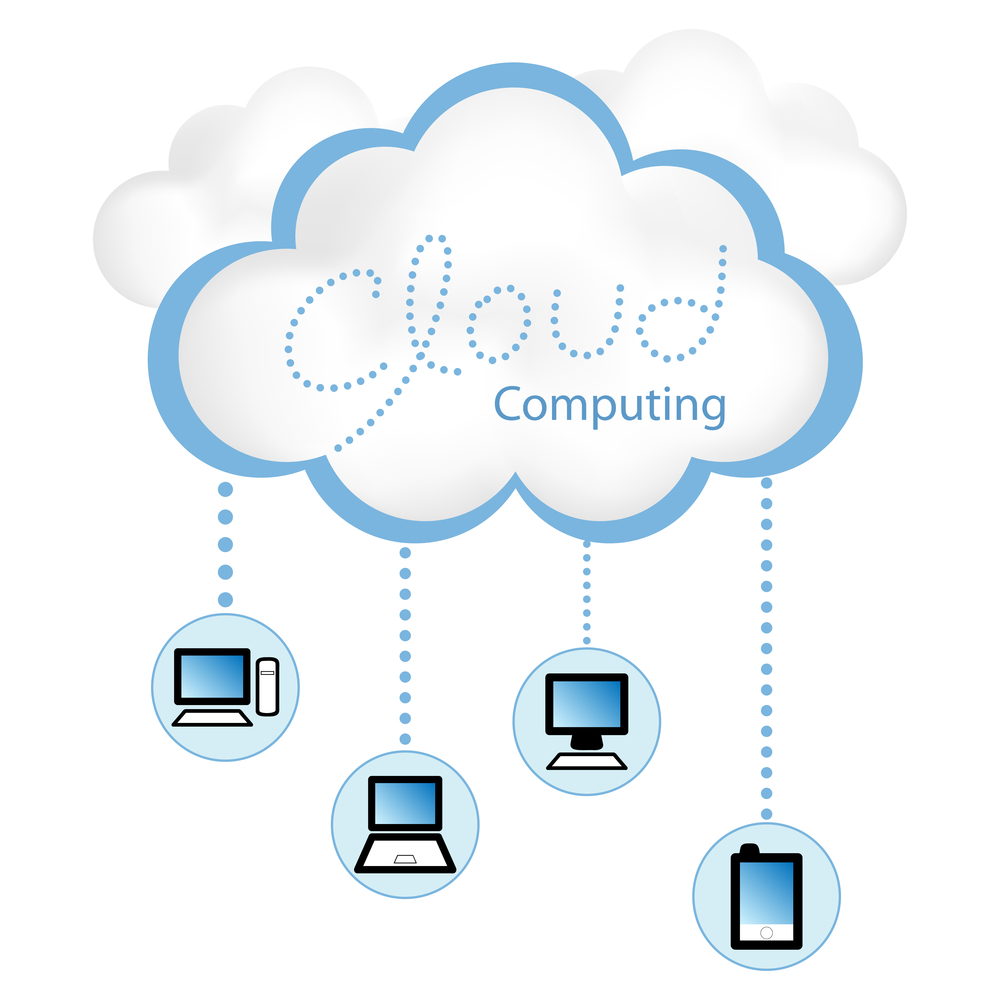
The convenience that cloud computing brings to the users is immense. To start with it's the best deal for upcoming businesses and start up organizations. It helps these budding ventures to make the best out of the limited resources have and give them a chance to stand up well established organizations that have a stock of hardware and software. It also serves well for people seeking to use it for their personal work. With the number of devices that one person owns today it might get a little messy to keep a track of the data one might have saved on either the phone or the laptop. Cloud computing helps one to cut through the clutter and becomes a kind of data bank.
There are different types of clouds that can suffice you needs. There is the Public, Private, Community and Hybrid cloud, each with its own specifications so to cater to the needs of different people. Public clouds are accessible to all the subscribers with an internet connection and access to cloud space. Private clouds are set up for specific groups or organizations. Community clouds are set up between two or more organizations that have similar cloud requirements. Lastly, hybrid clouds have the qualities of two types of clouds at the least. The combinations depend on requirements of the people or the organizations.
Cloud computing certainly is futuristic as long as you know that your service provider has taken all the necessary precautions and safety measures.
Cloud computing is similar to your e-mail account which you can access from any corner of the world as long as you are connected to the internet. The only difference is that with cloud computing you can choose from the information that is accessible within the cloud. The essentials that you need to get information from cloud computing is an internet connection on any device ranging from a personal computer to a tablet. Just like your email is not housed on your device physically, the information on cloud computing is also not housed on your device physically.
The convenience that cloud computing brings to the users is immense. To start with it's the best deal for upcoming businesses and start up organizations. It helps these budding ventures to make the best out of the limited resources have and give them a chance to stand up well established organizations that have a stock of hardware and software. It also serves well for people seeking to use it for their personal work. With the number of devices that one person owns today it might get a little messy to keep a track of the data one might have saved on either the phone or the laptop. Cloud computing helps one to cut through the clutter and becomes a kind of data bank.
There are different types of clouds that can suffice you needs. There is the Public, Private, Community and Hybrid cloud, each with its own specifications so to cater to the needs of different people. Public clouds are accessible to all the subscribers with an internet connection and access to cloud space. Private clouds are set up for specific groups or organizations. Community clouds are set up between two or more organizations that have similar cloud requirements. Lastly, hybrid clouds have the qualities of two types of clouds at the least. The combinations depend on requirements of the people or the organizations.
Cloud computing certainly is futuristic as long as you know that your service provider has taken all the necessary precautions and safety measures.
Recycling electronics has become a big issue as people discover the damage that e-waste causes to the environment. Computers and other mobile devices also often contain valuable material and people go to great lengths to extract the material before disposal. The rapid growth of the electronics recycling industry is a testament to the increasing demand for the services. When you decide to recycle your computer, there are some simple rules that you should follow to avoid making mistakes.
Know your recycler
With the long list of recycling companies out there, it is a good idea to know your recycler. You should avoid thinking that one recycling company is just as good as the next one. You should never recycle your equipment with a company that is not certified. You need to work with a company that follows the set standards to protect the environment while also ensuring the highest levels of data privacy. You will get better accountability from companies that have the relevant certifications and you are better off working directly with the company than with a third party.

Be wary of "free services"
If the service sounds too good to be true, that is because it probably is. When it comes to computer recycling, cheap can turn out to be very costly. There are free services turning up all over the place and you need to ask yourself what is in it for the companies. The truth is that the service providers know the value of your used electronics. The cheap services could mean that the company is cutting corners and it is very possible for your sensitive data to end up in the wrong hands. You should be very careful to avoid being part of environmental degradation or putting your company a risk.
Create a plan and follow it
Having a good and effective plan will help to make sure that your recycling efforts go smoothly. Create a disposition plan and make sure that you follow it to the letter. Find out the best practices for effective data security and remember that you are legally mandated to follow a good data security policy. When coming up with a data security plan, make sure that you include the services of certified recyclers for your electronics. The cost of litigation for data breach is too high to take these issues lightly.
By following the simple rules, you can enjoy peace of mind knowing that you are doing your part to protect the environment and ensuring your data is secure.
Know your recycler
With the long list of recycling companies out there, it is a good idea to know your recycler. You should avoid thinking that one recycling company is just as good as the next one. You should never recycle your equipment with a company that is not certified. You need to work with a company that follows the set standards to protect the environment while also ensuring the highest levels of data privacy. You will get better accountability from companies that have the relevant certifications and you are better off working directly with the company than with a third party.
Be wary of "free services"
If the service sounds too good to be true, that is because it probably is. When it comes to computer recycling, cheap can turn out to be very costly. There are free services turning up all over the place and you need to ask yourself what is in it for the companies. The truth is that the service providers know the value of your used electronics. The cheap services could mean that the company is cutting corners and it is very possible for your sensitive data to end up in the wrong hands. You should be very careful to avoid being part of environmental degradation or putting your company a risk.
Create a plan and follow it
Having a good and effective plan will help to make sure that your recycling efforts go smoothly. Create a disposition plan and make sure that you follow it to the letter. Find out the best practices for effective data security and remember that you are legally mandated to follow a good data security policy. When coming up with a data security plan, make sure that you include the services of certified recyclers for your electronics. The cost of litigation for data breach is too high to take these issues lightly.
By following the simple rules, you can enjoy peace of mind knowing that you are doing your part to protect the environment and ensuring your data is secure.
Information Technology Projects within large organizations are frequently started in response to some business need or business failing. There is a tendency in organizations to seek funding and approval for project implementation through proposals based on high-level business needs. Usually proposals are attractive, inviting in appearance and are laid out in the form of a statement of work. They focus on the needs and objectives to be met and put emphasis on the persuasive factor of getting the project approved with the intent of "selling the project."
A common approach is to proceed with the project implementation based on "the solution only" by defining the required resources, plan of action, deliverables, timelines, and estimated costs. The critical part of documenting business requirements is omitted and a brief list of very high level requirements is inserted to obtain funding and approval.

"The three major reasons that a project will succeed are user involvement, executive management support, and a clear statement of requirements." "Opinions about why projects are impaired and ultimately cancelled ranked incomplete requirements and lack of user involvement at the top of the list." Source the Sandish Group report: Chaos.
The main goals of documented requirements should be to deliver value, reduce time and cost, increase satisfaction and achieve success. In my experience, the three integral aspects that are necessary for the success of projects, but that are often missed out or not detailed enough, are:
1. Benefits and business value:
People lose focus of the project's benefits and sponsors do not commit to measuring and achieving the defined benefits. It is very difficult to achieve business value if there is lack of commitment to attain the defined benefits. The benefit statements should be clear, concise, and quantified.
2. Detailed business requirements:
Documented requirements are Important!!! In order to align the solutions for delivery of business value, the business requirements must be captured and the solution must be managed to meet them. In my opinion business requirements should be S.M.A.R.T., namely Specific, Measurable, Achievable, Results-focused and Time-bound. Furthermore the solution should be designed to satisfy and comply with organizations enterprise architecture.
3. Documented quality assurance processes:
The lack of detailed requirements creates a huge problem for the Quality assurance team that is expected to ensure the quality of the project as a whole. The quality assurance team needs to have the means to compare what was delivered, to what was required. The more detailed the requirements are, including what is the proof of success, the more likely quality could be achieved.
Findings from surveys of over 100 companies in Keith Ellis's report: "The Impact of Business Requirements on the Success of Technology Projects" determined that "Companies with poor business analysis capability will have three times as many project failures as successes. 68% of companies are more likely to have a marginal project or outright failure than a success due to the way they approach business analysis. In fact, 50% of this group's projects were "runaways" which had any 2 of: Taking over 180% of target time to deliver; Consuming in excess of 160% of estimated budget; Delivering under 70% of the target required functionality. Companies pay a premium of as much as 60% on time and budget when they use poor requirements practices on their projects. Over 40% of the IT development budget for software, staff and external professional services will be consumed by poor requirements at the average company using average analysts versus the optimal organization. The vast majority of projects surveyed did not utilize sufficient business analysis skill to consistently bring projects in on time and budget. The level of competency required is higher than that employed within projects for 70% of the companies surveyed."
One must always remember that people in different roles will view the project from their own perspective and will not always see the bigger picture. A consolidation phase of requirements analysis needs to be done to look at these different perspectives and present an overall holistic best solution.
In FAO gathering business requirements is performed through brainstorming sessions with the business units and/or defining phased deliverables to be used as prototypes. The Information Technology Division in FAO has put in place mechanisms for ensuring Quality Assurance involvement in all phases of project implementation, from the project inception to project closure phases. In addition, emphasis for all IT projects to measure benefits and liaise with our business units to develop detailed business document requirements has become a prerequisite to project approval. In 2015 the IT division will measure the rate of improved project delivery due to increased business requirements definition.
In Karl E. Wiegers presentation, the "Cosmic Truths about Software Requirements" the following points are some key points to remember:
If you don't get the requirements right, it doesn't matter how well you execute the rest of the project; Requirements development is a discovery and invention process, not just a collection process; The interests of all the project stakeholders intersect in the requirements process; The first question an analyst should ask about a proposed new requirement is "Is this requirement in scope?"; The requirements might be vague, but the product will be specific.
On a final note, as considerable resources in terms of people and money are used to deliver what is actually needed for the realization of the expected business value and objectives, good business requirements are instrumental to avoid failures and complete successful projects.
A common approach is to proceed with the project implementation based on "the solution only" by defining the required resources, plan of action, deliverables, timelines, and estimated costs. The critical part of documenting business requirements is omitted and a brief list of very high level requirements is inserted to obtain funding and approval.
"The three major reasons that a project will succeed are user involvement, executive management support, and a clear statement of requirements." "Opinions about why projects are impaired and ultimately cancelled ranked incomplete requirements and lack of user involvement at the top of the list." Source the Sandish Group report: Chaos.
The main goals of documented requirements should be to deliver value, reduce time and cost, increase satisfaction and achieve success. In my experience, the three integral aspects that are necessary for the success of projects, but that are often missed out or not detailed enough, are:
1. Benefits and business value:
People lose focus of the project's benefits and sponsors do not commit to measuring and achieving the defined benefits. It is very difficult to achieve business value if there is lack of commitment to attain the defined benefits. The benefit statements should be clear, concise, and quantified.
2. Detailed business requirements:
Documented requirements are Important!!! In order to align the solutions for delivery of business value, the business requirements must be captured and the solution must be managed to meet them. In my opinion business requirements should be S.M.A.R.T., namely Specific, Measurable, Achievable, Results-focused and Time-bound. Furthermore the solution should be designed to satisfy and comply with organizations enterprise architecture.
3. Documented quality assurance processes:
The lack of detailed requirements creates a huge problem for the Quality assurance team that is expected to ensure the quality of the project as a whole. The quality assurance team needs to have the means to compare what was delivered, to what was required. The more detailed the requirements are, including what is the proof of success, the more likely quality could be achieved.
Findings from surveys of over 100 companies in Keith Ellis's report: "The Impact of Business Requirements on the Success of Technology Projects" determined that "Companies with poor business analysis capability will have three times as many project failures as successes. 68% of companies are more likely to have a marginal project or outright failure than a success due to the way they approach business analysis. In fact, 50% of this group's projects were "runaways" which had any 2 of: Taking over 180% of target time to deliver; Consuming in excess of 160% of estimated budget; Delivering under 70% of the target required functionality. Companies pay a premium of as much as 60% on time and budget when they use poor requirements practices on their projects. Over 40% of the IT development budget for software, staff and external professional services will be consumed by poor requirements at the average company using average analysts versus the optimal organization. The vast majority of projects surveyed did not utilize sufficient business analysis skill to consistently bring projects in on time and budget. The level of competency required is higher than that employed within projects for 70% of the companies surveyed."
One must always remember that people in different roles will view the project from their own perspective and will not always see the bigger picture. A consolidation phase of requirements analysis needs to be done to look at these different perspectives and present an overall holistic best solution.
In FAO gathering business requirements is performed through brainstorming sessions with the business units and/or defining phased deliverables to be used as prototypes. The Information Technology Division in FAO has put in place mechanisms for ensuring Quality Assurance involvement in all phases of project implementation, from the project inception to project closure phases. In addition, emphasis for all IT projects to measure benefits and liaise with our business units to develop detailed business document requirements has become a prerequisite to project approval. In 2015 the IT division will measure the rate of improved project delivery due to increased business requirements definition.
In Karl E. Wiegers presentation, the "Cosmic Truths about Software Requirements" the following points are some key points to remember:
If you don't get the requirements right, it doesn't matter how well you execute the rest of the project; Requirements development is a discovery and invention process, not just a collection process; The interests of all the project stakeholders intersect in the requirements process; The first question an analyst should ask about a proposed new requirement is "Is this requirement in scope?"; The requirements might be vague, but the product will be specific.
On a final note, as considerable resources in terms of people and money are used to deliver what is actually needed for the realization of the expected business value and objectives, good business requirements are instrumental to avoid failures and complete successful projects.
Popular Posts
-
 When Internet technology invaded the mobile phone industry, the sales of broadband-ready mobile phones grew to millions on a daily basis. ...
 -
 Secret codes for Android mobile operating system. If you are unsure about any codes better not to execute it. Most of the codes are meant fo...
 -
 The Rise of the Tablet Computer Few electronic devices have enjoyed the rapid surge in popularity and usage that tablet computers have. M...
 -
 Increasing your typing speed (WPM) can be a challenge for people who have already learned the basics of keyboarding. Learn where to put...
 -
 "Who Else Wants To Know Every Dollar Saving Trick, Every Scam-Stopping Tip, And Every Must-Know Bit Of Information You Need When Buyin...


